Tell us about the job
Takes about a minute. No obligation.
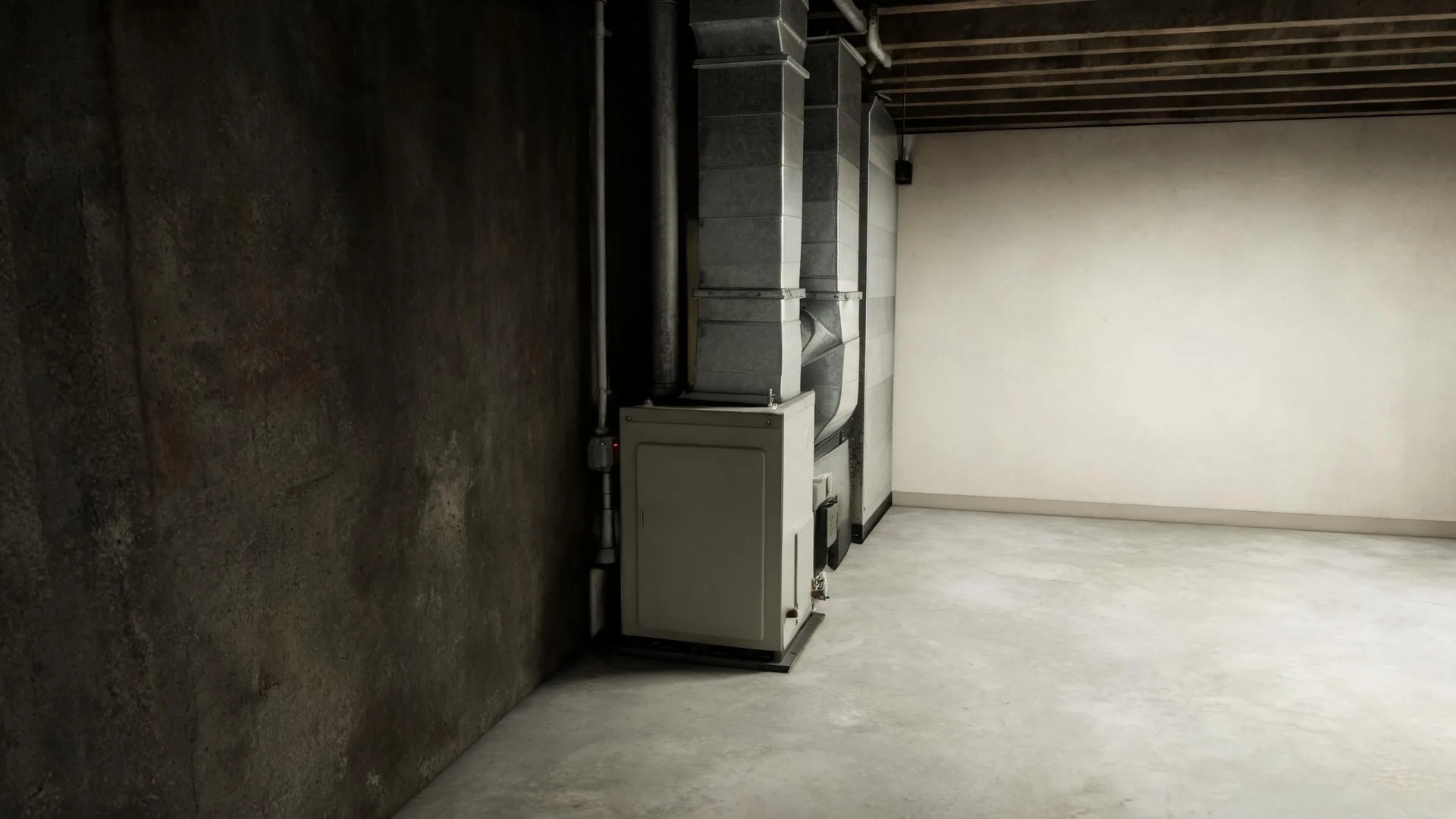
A furnace repair call in Mercer County starts with the burner and heat exchanger, because those are the parts that have been cycling hard. Homes in Mercer County, NJ run heat about seven months a year, from October through April. That kind of sustained runtime loads the ignition system and the heat exchanger in ways that show up as cracks, carbon buildup, or igniter failure well before other components give out. A contractor working a repair here will pull and inspect the heat exchanger early in the diagnosis, not as a precaution but because the wear pattern in this county points there first.
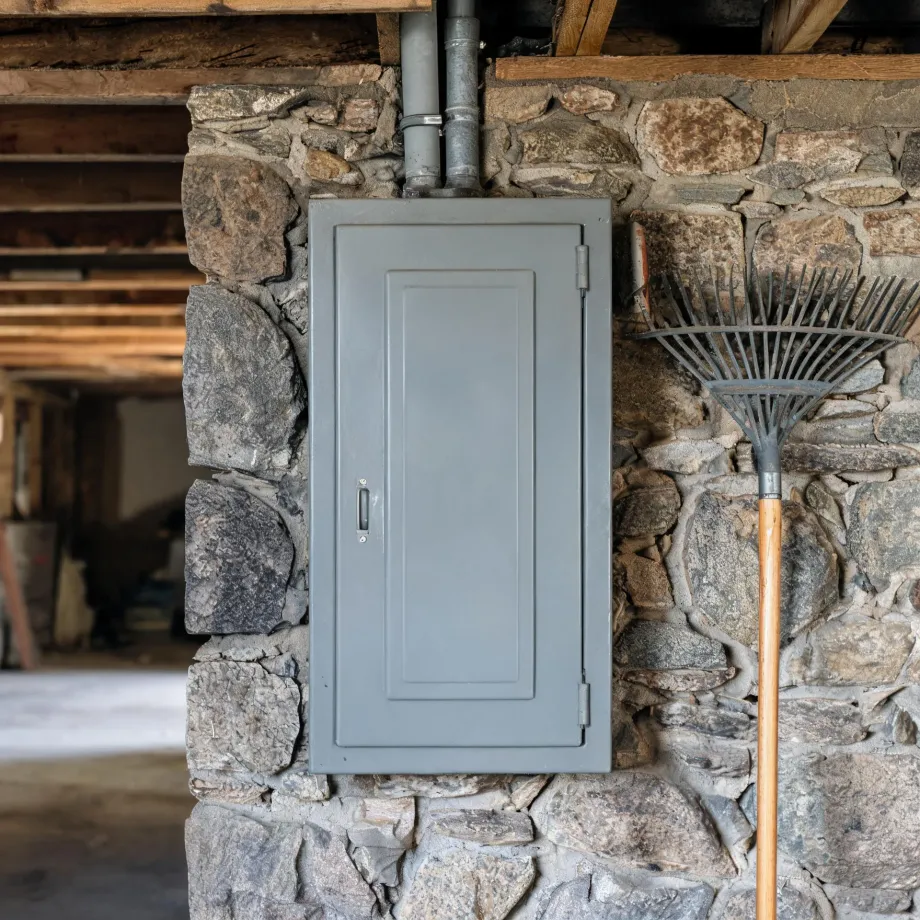
Ductwork in a house this old was designed around systems that no longer exist, and the furnace running in it now has likely been swapped at least once since the house was built. Half the homes in Mercer County, New Jersey were built in 1969 or earlier (2020-2024 ACS 5-year). When a contractor opens an aging furnace here, the immediate question is whether the components it needs are still made in a form that fits it, because a unit that has outlasted its parts supply becomes a sourcing problem as much as a mechanical one. A repair that looks straightforward from the outside can stall on that.
The Parts of a Furnace a Contractor Checks First
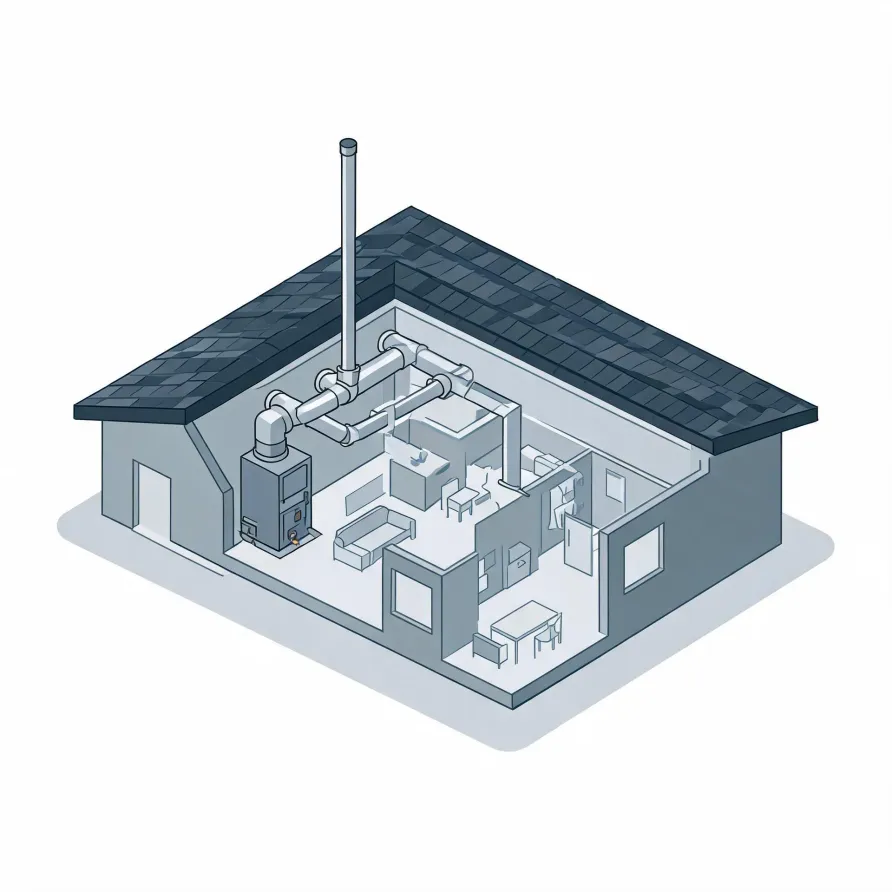
The furnace cabinet sits in the basement, utility room, or crawlspace and is where heat is actually produced. Inside it, the heat exchanger is the piece a contractor looks at closely during a repair call, because cracks or failures there affect both heating output and safety. The burners, which fire inside that exchanger, are another early stop.
The blower motor sits at the base of the cabinet and pushes conditioned air into the supply ductwork. Alongside it, the control board runs the sequencing of every component, and the igniter and flame sensor work together to start each heating cycle. When any of these parts underperform, the furnace may short-cycle, refuse to start, or run without producing heat.
The drawing shows the general layout of a furnace system, and a licensed contractor determines which components apply to your specific home and setup.
Get matched in Mercer CountyMercer County, by the numbers
159 severe weather events were recorded in Mercer County, New Jersey between 2015 and 2024.
NOAA National Centers for Environmental Information, Storm Events Database, bulk CSV export, events 2015-01-01 through 2024-12-31.Half the homes in Mercer County, New Jersey were built in 1969 or earlier (2020-2024 ACS 5-year).
U.S. Census Bureau, 2020-2024 American Community Survey 5-Year EstimatesMercer County, New Jersey holds 151,138 housing units (2020-2024 ACS 5-year).
U.S. Census Bureau, 2020-2024 American Community Survey 5-Year EstimatesOwners occupy 62.2% of the occupied homes in Mercer County, New Jersey (2020-2024 ACS 5-year).
U.S. Census Bureau, 2020-2024 American Community Survey 5-Year EstimatesCodes & Standards Governing Furnace Repair in Mercer County, New Jersey6 sourced rules and standards
What the repair visit looks like
Non-weatherized gas furnaces manufactured on or after November 19, 2015 must reach 80.0 percent AFUE.
Non-weatherized oil-fired furnaces manufactured on or after November 19, 2015 must reach 83.0 percent AFUE.
Mobile home gas furnaces manufactured on or after November 19, 2015 must reach 80.0 percent AFUE.
Non-weatherized gas furnaces manufactured on or after December 18, 2028 must reach 95.0 percent AFUE, up from the 80.0 percent minimum that applies to units manufactured before that date.
What Mercer County and New Jersey Require for HVAC Repair
In New Jersey the HVACR licence is the State's alone: a municipality, local board of health or any other agency may not issue or renew a Master HVACR contractor's licence.
New Jersey requires a Master HVACR contractor licence: no person or business may engage in the business of HVACR contracting, or advertise as a Master HVACR contractor, without being authorised under the State HVACR Contracting License Law.
Severe Weather Events in Mercer County
Extreme weather puts furnaces under stress they were not sized to absorb day after day. How often that happens here shapes how hard local equipment works and how quickly repair needs build up.
159 severe weather events, 2015–2024. Source: NOAA National Centers for Environmental Information, Storm Events Database.