Tell us about the job
Takes about a minute. No obligation.
Homes in Warren County, NJ run heat about eight months a year, from October through May. The burner cycles through that run every season, and the heat exchanger and ignition system collect wear with each one. By the time a furnace stops lighting or stops holding a flame, a contractor checking it will almost always find that the ignition components or the heat exchanger itself have taken the brunt. A short idle period in summer leaves little time for a marginal part to announce itself before the next heating season begins, so the first cold week tends to surface failures that were building quietly.
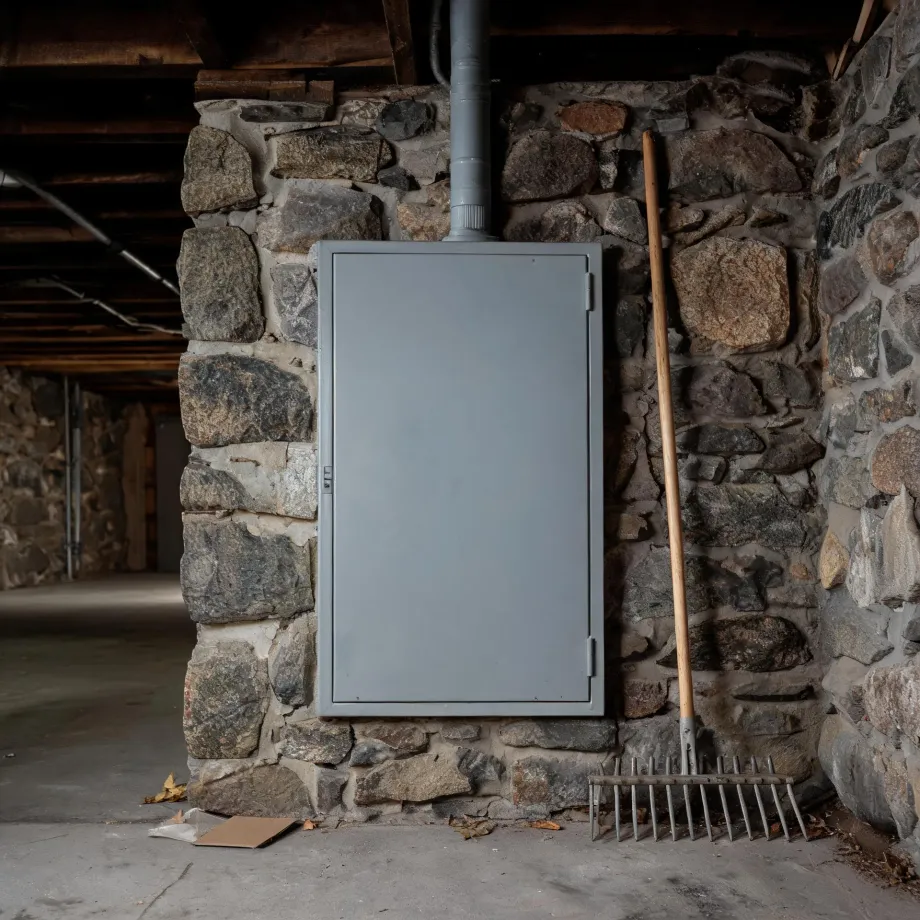
Furnaces running in houses built for earlier generations of equipment can outlast their own parts availability. Half the homes in Warren County, New Jersey were built in 1972 or earlier (2020-2024 ACS 5-year). A contractor opening a furnace here has to establish what that specific unit actually takes, heat exchanger, igniter, control board, and then whether those components are still in production or sitting on a distributor's shelf somewhere. If they are not, the repair scope changes before any labor estimate is written.
The Parts of a Furnace a Contractor Checks First
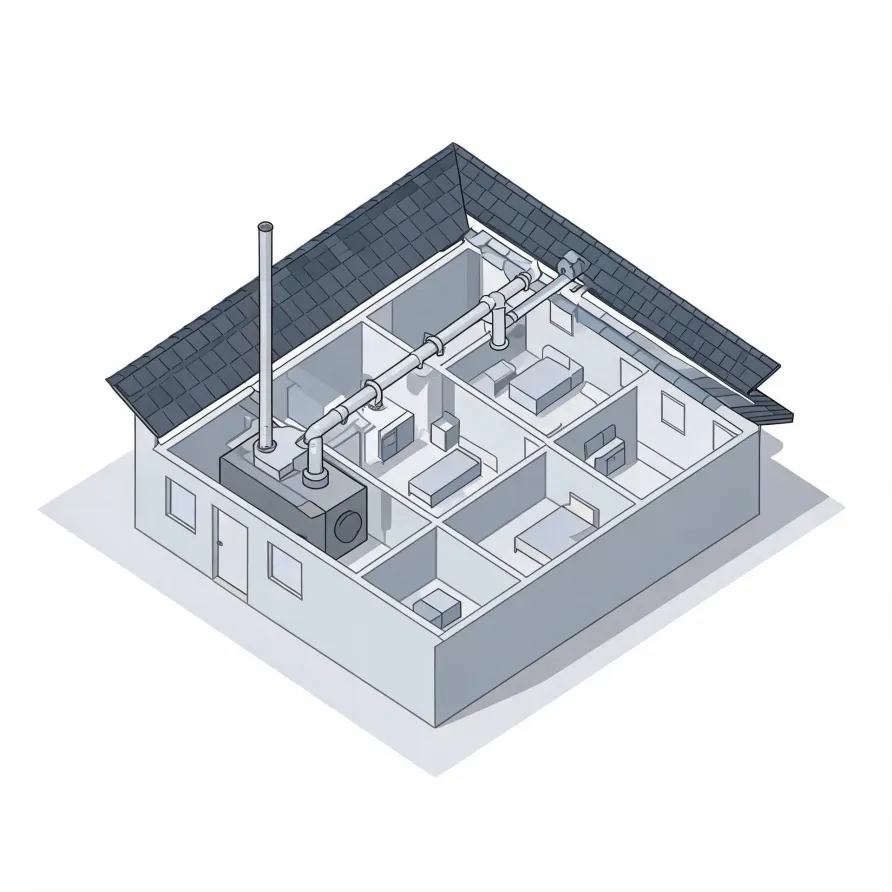
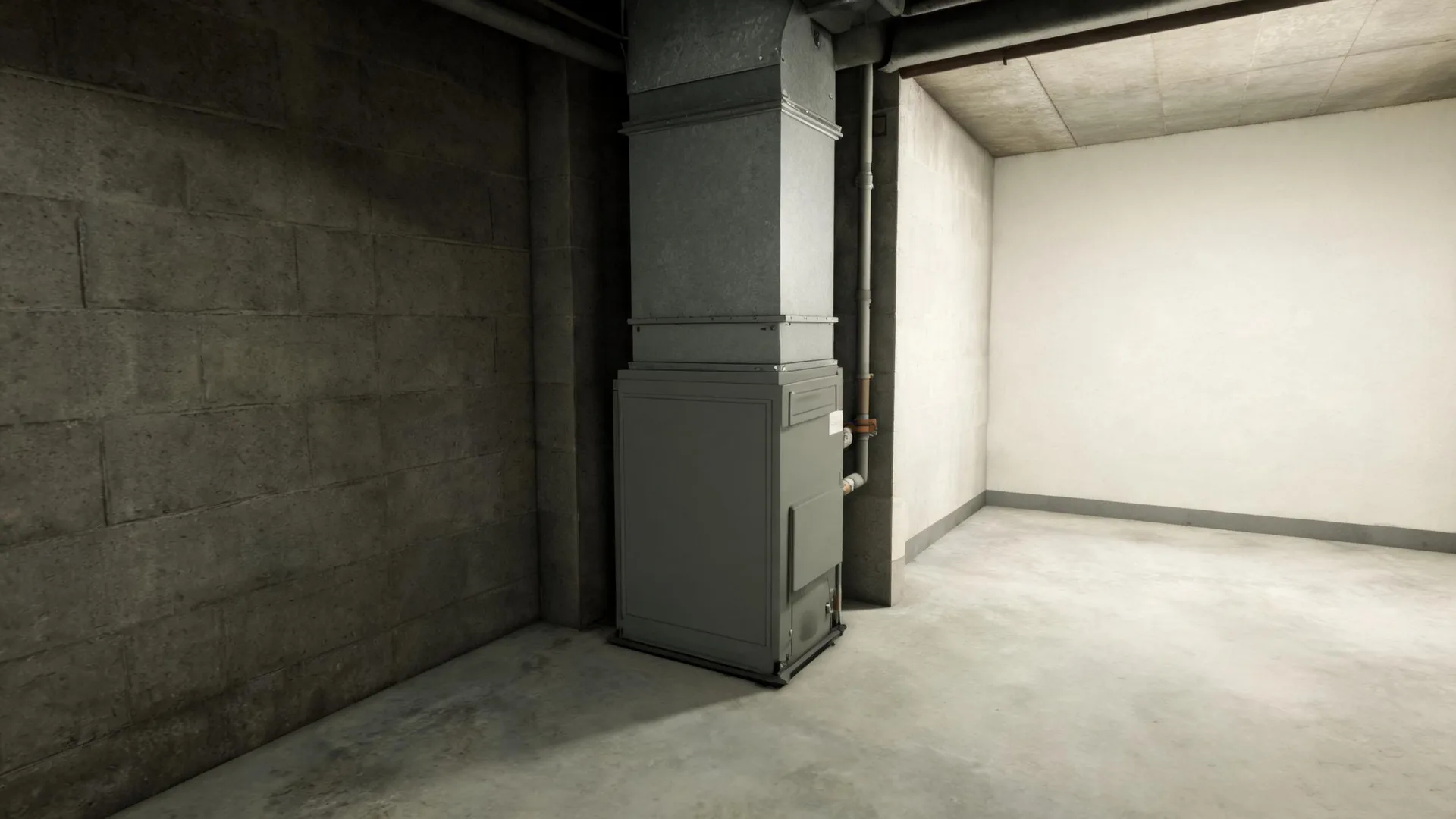
The furnace itself sits in the basement, utility room, or crawl space and is the piece a contractor goes to first. Inside it, the heat exchanger is the part most likely to be behind a heating problem, and a cracked one means combustion gases can enter the living space. The burners and the igniter, which sit just below the heat exchanger, are the next stops when the unit fails to fire.
The blower motor and its fan wheel sit in the lower cabinet and push conditioned air through the house. The flue pipe runs from the top of the furnace to an outside vent and carries exhaust gases out. The control board, tucked inside the cabinet, reads the sensors and tells every other part when and how to run.
The drawing shows a representative layout, and a licensed contractor determines what applies to your specific system and home.
Get matched in Warren CountyWarren County, NJ, by the numbers
199 severe weather events were recorded in Warren County, New Jersey between 2015 and 2024.
NOAA National Centers for Environmental Information, Storm Events Database, bulk CSV export, events 2015-01-01 through 2024-12-31.Half the homes in Warren County, New Jersey were built in 1972 or earlier (2020-2024 ACS 5-year).
U.S. Census Bureau, 2020-2024 American Community Survey 5-Year EstimatesWarren County, New Jersey holds 46,789 housing units (2020-2024 ACS 5-year).
U.S. Census Bureau, 2020-2024 American Community Survey 5-Year EstimatesOwners occupy 75.1% of the occupied homes in Warren County, New Jersey (2020-2024 ACS 5-year).
U.S. Census Bureau, 2020-2024 American Community Survey 5-Year EstimatesCodes & Standards That Apply to Furnace Repair in Warren County, New Jersey6 sourced rules & standards
What HVAC Repair Looks Like in Warren County
Non-weatherized gas furnaces manufactured on or after November 19, 2015 must reach 80.0 percent AFUE.
Non-weatherized oil-fired furnaces manufactured on or after November 19, 2015 must reach 83.0 percent AFUE.
Mobile home gas furnaces manufactured on or after November 19, 2015 must reach 80.0 percent AFUE.
Non-weatherized gas furnaces manufactured on or after December 18, 2028 must reach 95.0 percent AFUE, up from the 80.0 percent minimum that applies to units manufactured before that date.
Licensing Rules for HVAC Repair in Warren County, New Jersey
In New Jersey the HVACR licence is the State's alone: a municipality, local board of health or any other agency may not issue or renew a Master HVACR contractor's licence.
New Jersey requires a Master HVACR contractor licence: no person or business may engage in the business of HVACR contracting, or advertise as a Master HVACR contractor, without being authorised under the State HVACR Contracting License Law.
Weather Stress on HVAC Equipment in Warren County
Heating equipment works harder when outdoor conditions swing wide, and the demand those swings place on a furnace shows up as wear, strain, and repair calls. How much stress a system accumulates is a local question, shaped by what the weather actually does in Warren County.
199 severe weather events, 2015–2024. Source: NOAA National Centers for Environmental Information, Storm Events Database.