

Why your furnace smells like burning in New Jersey

Tell a local repair pro what your furnace is doing.

Find my pro

Why does my furnace smell like it's burning?

The first time your furnace kicks on after months of not running, a burning smell can send you straight to the thermostat to shut it off. With gas furnaces heating most homes in New Jersey and power costing what it does here, you want to know fast whether this is something to wait out or something to deal with now, especially with people counting on you to keep the house warm.

Usually dust burning off, but not always

The first time your furnace runs after sitting idle, dust that settled on the heat exchanger and burners over the summer burns off and puts a smell through the vents. That smell should fade within an hour or two as the furnace keeps running. If it doesn't fade, or it smells sharp, like plastic or something electrical, that's not dust. It can mean a wire or a part near the blower motor is overheating, or something inside the cabinet is cracked and letting fumes touch a hot surface. A smell that lingers past a couple of hours, or comes back every time the furnace cycles, is worth having a technician look at before you run the system through a New Jersey winter on it.

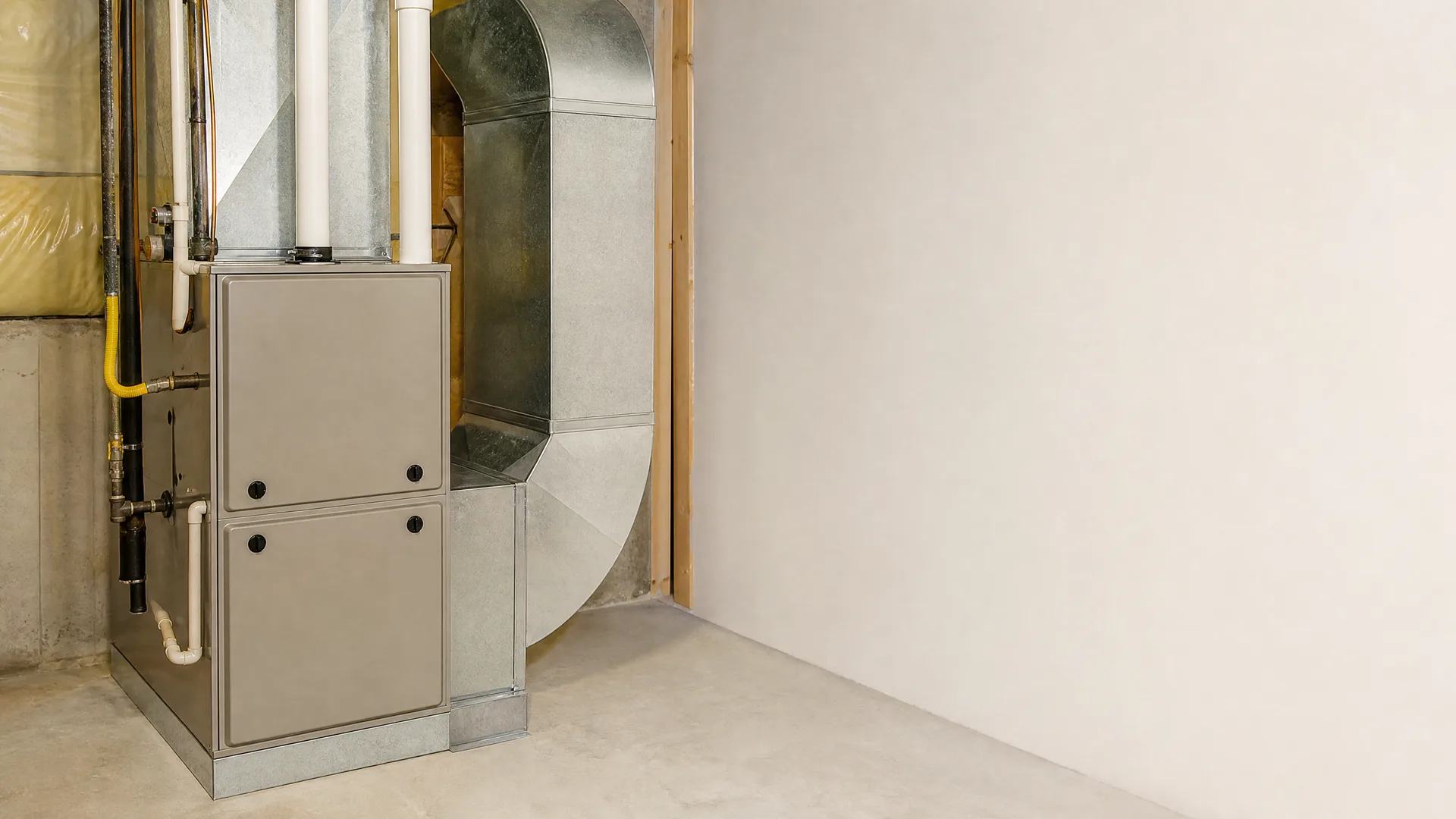
A gray high-efficiency furnace stands on a concrete basement floor beside galvanized sheet-metal ductwork, white PVC vent pipes, copper and black piping, and unfinished wood stud framing.

Dust burning off

A faint burning smell when the furnace first fires up for the season is normal. Dust settles on the heat exchanger and burner over the months it sat idle, and it burns off in the first ten or fifteen minutes. The smell fades on its own and doesn't come back the next time the furnace runs.


A gray furnace with two access panels stands on a concrete basement floor beside sheet-metal ductwork, with pipes, flexible conduit and an electrical box on the concrete wall to the left.

Smell that lingers or returns

If the smell doesn't fade after the first run, or shows up again on later cycles, something inside is burning that shouldn't be. A cracked heat exchanger, a frayed wire, or dust packed into the blower motor can all cause it. Shut the furnace off and have it looked at before running it again.

A man in a dark blue shirt stands in an open front doorway of a stucco and wood-clad house, facing a blond woman seen from behind in the foreground on a stone walkway.

What that smell means for your house

A smell that doesn't fade in fifteen minutes usually means something is overheating. A cracked heat exchanger, a clogged filter forcing the blower to strain, or wiring that's breaking down inside the cabinet. Any of those can put a room that depends on that furnace at risk, especially if someone in the house is older or sick and can't easily move to another part of the home if something goes wrong.

A furnace that's working too hard also runs up your bill, and power in New Jersey already costs more than most places. If the smell is burning plastic or something electrical, that's not a wait and see situation. A local contractor who services furnaces all winter in this area can tell you quickly whether it's the exchanger, the wiring, or something simpler, and get back to you instead of sending a crowd of companies after the same call.

Interior corner of a dining room with a round wooden table, a ceramic vase holding olive branches, a dark spindle-back chair near a curtained window, and a sideboard with a lamp against beige walls.
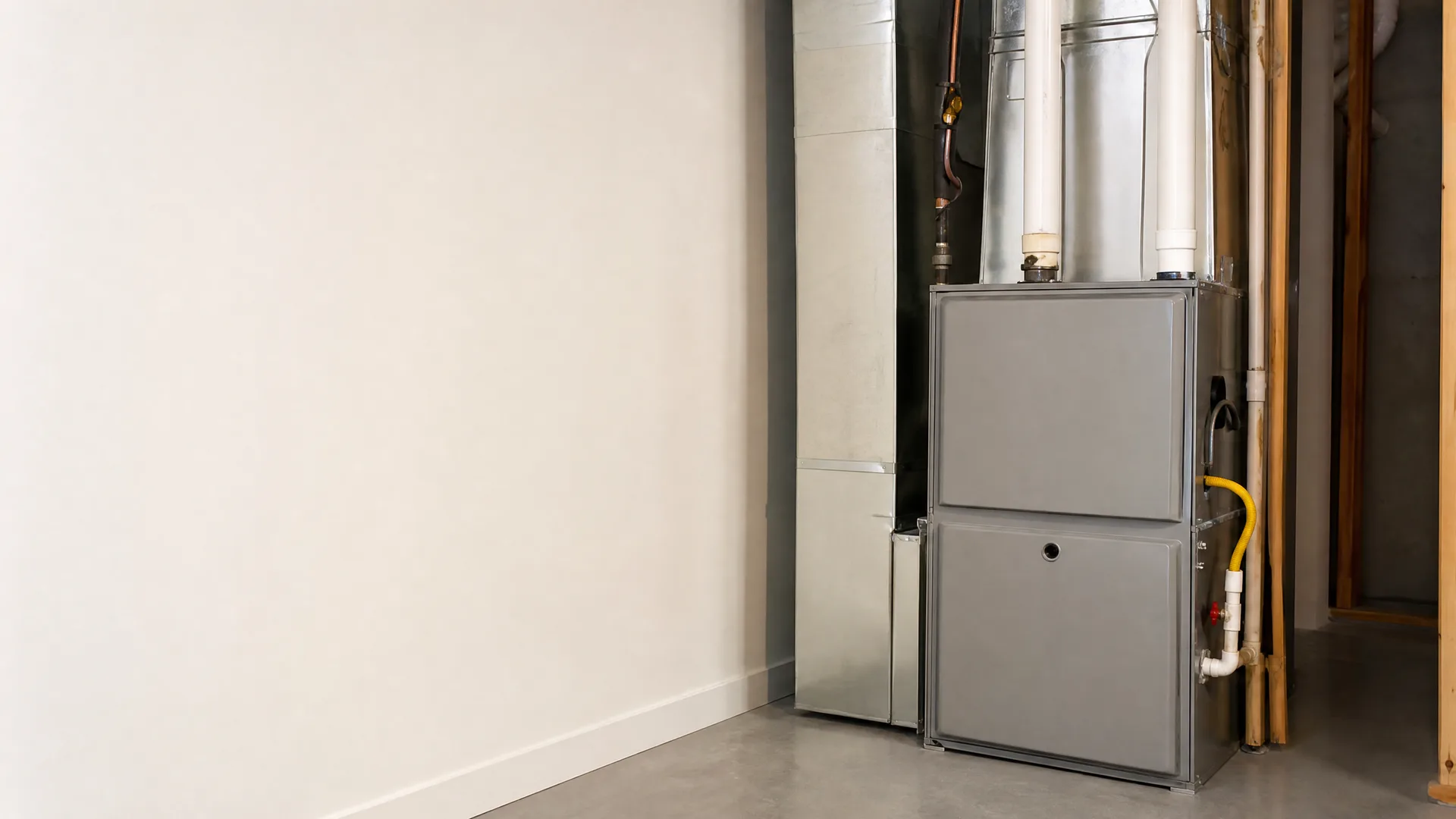
A gas furnace with sheet-metal ductwork, PVC vent pipes and copper and black piping stands against a wall in a basement with a bare light-colored wall and concrete floor.

Why the filter matters here

A clogged filter is one of the more common reasons a furnace runs hotter than it should. When airflow across the heat exchanger drops, the metal holds heat longer instead of passing it into the ducts. That extra heat can scorch dust on the burner assembly past the point where it burns off clean, and it can also stress the wiring near the blower compartment. Checking the filter is the one thing worth doing yourself before anything else.

A gray furnace with attached sheet-metal ductwork, white PVC vent pipes, copper and yellow gas lines stands against a wall in a room with a plain white wall and concrete floor.

What a cracked heat exchanger does

The heat exchanger separates the flame from the air moving through your ducts. A crack lets combustion gas mix with that airflow, and the smell that comes with it often carries a sharper, metallic edge rather than plain dust. This isn't something to test by running the furnace longer to see if it clears. A contractor can check the exchanger with a camera or a combustion analyzer, tools that aren't something you'd have on hand at home.

Winter nights average 26°F statewide

At 26°F overnight, your furnace is running hard most of the night, every night, through December, January and February. That long a burn gives any dust, loose wiring or cracked part more time to overheat before it shuts off.

NOAA nClimDiv 1991-2020 county normals weighted by homes

A woman with long blonde hair in a light blue shirt leans back on a beige sofa with her eyes closed, in a softly lit living room with cushions and a blurred plant and shelf in the background.
A woman with long dark hair in a gray knit sweater sits on a gray sofa with a cushion, looking toward a window in a living room with framed pictures and a lamp in the background.
A woman with long dark hair in a light grey knit sweater sits on a sofa indoors, looking to her right, with a framed landscape picture, a potted plant and a curtained window behind her.
A woman with long dark hair leans back against a gray sofa with her eyes closed, in a living room with a curtained window, a potted plant, and a dark screen in the background.
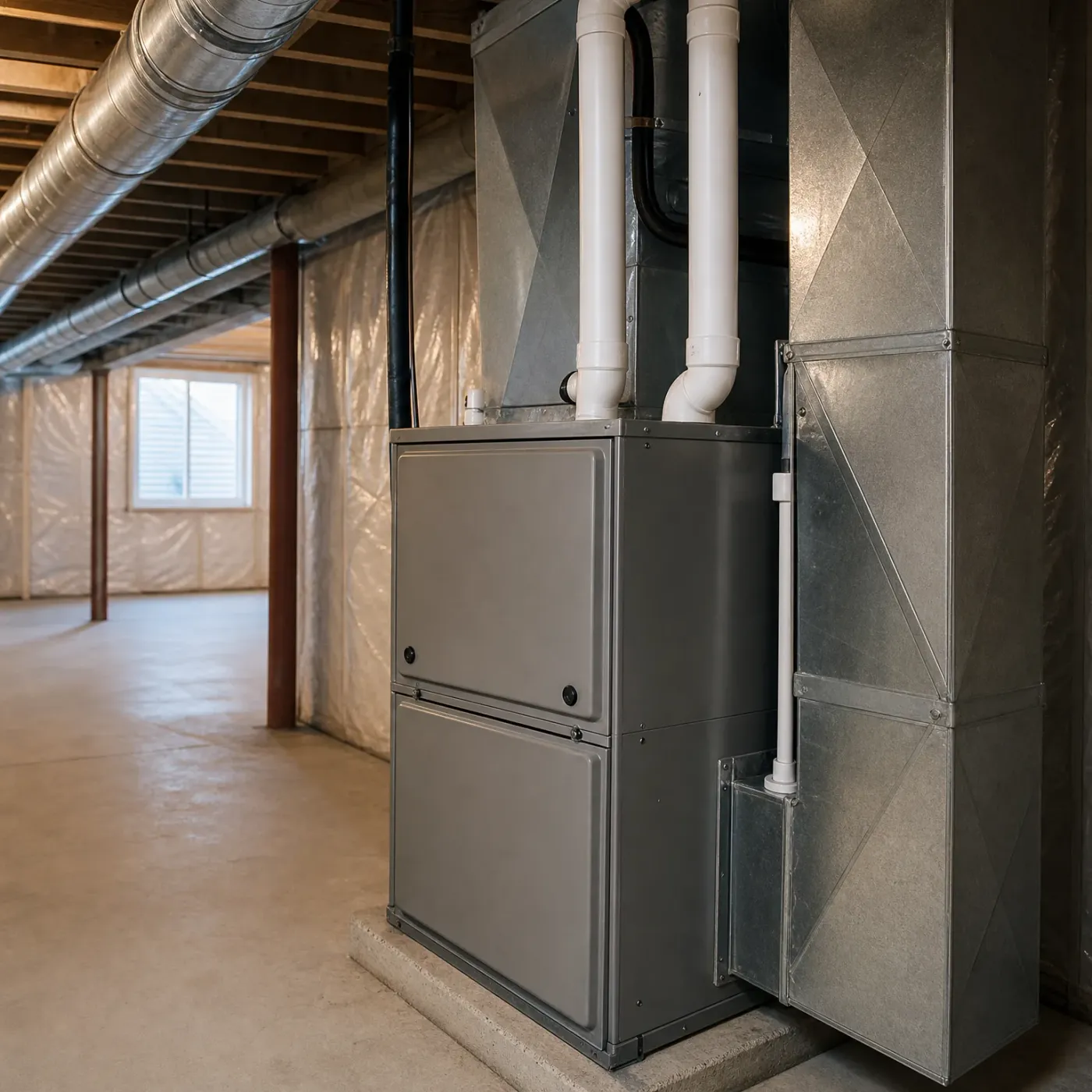
A gray high-efficiency furnace on a concrete pad in an unfinished basement, with white PVC vent pipes, galvanized sheet-metal ductwork, insulated walls and a small window in the background.

Get the right pro for your furnace

Your request stays with one local pro.

Describe your furnace job, and a local pro who handles it gets in touch.

Get a furnace pro

Asking costs nothing, and the choice to hire stays yours.

A gray high-efficiency furnace with white PVC vent pipes stands beside sheet-metal ductwork and a water heater in an unfinished basement with concrete walls and wood framing.
A furnace running the way it should, venting through its PVC pipes with the ductwork tight and the cabinet closed up.
A beige gas furnace with a metal flue pipe stands in a basement against concrete block walls, beside sheet-metal ductwork, copper and white plastic pipes, and a water heater at right.
A furnace in an older setup, galvanized ducts and copper lines overhead, where a burning smell has nowhere to fade but the basement air.

How the burn actually starts

  • A furnace lights by sparking the igniter, opening the gas valve, then proving the flame with a sensor before the blower turns on.
  • The burners sit directly under the heat exchanger, so anything built up on them scorches first when the gas valve opens.
  • A limit switch is supposed to shut the burners off if the heat exchanger gets hotter than it should.
  • If the limit switch is slow to react or wired wrong, the burners keep firing past the point where metal starts to smell.
  • The blower motor and its bearings run for hours on a cold night, and a dry or failing bearing can smell like burning dust under heat.
  • A cracked heat exchanger lets exhaust gas leak into the airstream instead of venting outside, which carries a different, sharper smell through the ducts.

A furnace doesn't just flip on. The igniter sparks first, the gas valve opens right after, and a flame sensor has to confirm the burners actually lit before the blower kicks on to push air through the ducts. That order matters, because every part in the chain has a chance to fail and change what you smell. The burners sit right under the heat exchanger, so dust or grease that's built up on them is the first thing to scorch once the gas valve opens. Above them, a limit switch is supposed to watch the heat exchanger and cut the burners off before it overheats. When that switch is slow, or wired wrong from a past repair, the burners keep firing past the point where the metal itself starts to smell hot. None of this involves the blower motor directly, but the motor has its own way of smelling like trouble. Its bearings spin for hours on a cold night, and a bearing running dry puts off a smell like burning dust once it heats up. The one smell that isn't about buildup or a slow switch is a cracked heat exchanger. That crack lets exhaust gas mix into the air the blower is pushing through your ducts, and it carries a sharper, different smell than scorched dust ever does. Knowing which part is behind the smell is most of the diagnosis.

An older beige furnace with two louvered vent panels stands on a concrete basement floor, connected to galvanized ductwork and a metal flue pipe, with gas piping and flexible conduit on the wall behind.
Before you get your furnace repair
A beige high-efficiency furnace in an unfinished basement, with white PVC vent pipes, a yellow gas line, metal ductwork, and exposed wood framing on a concrete floor.
After you get your furnace repair

Before you get your furnace repair

That burning smell keeps coming back every time the furnace cycles, and you're left guessing whether it's safe to leave it running overnight.

Connect with a pro

After you get your furnace repair

A local contractor who works on these systems all winter finds what's actually scorching and fixes it, so the furnace runs without that smell.

Connect with a pro

A burning smell that fades in fifteen minutes is dust doing what dust does every fall. One that lingers, or comes back every time the burners fire, means something inside the cabinet is overheating and that's a repair, not something to watch for a few more nights. A contractor who works on furnaces around New Jersey all winter has seen what a scorched smell usually traces back to in a setup like yours, whether it's an older cabinet with galvanized ducts overhead or a newer system vented through PVC. You'll be matched with one licensed local contractor for your situation, not a handful of companies competing for the callback. They'll know what to check first and why, because this is the kind of call they get all season. Either the smell is nothing to worry about, or it's telling you something that needs a hand on it before the next cold night.

An empty basement with bare concrete walls and floor, exposed wooden joists and pipes overhead, and a dark furnace with sheet-metal ductwork and vent pipes in the right corner.

Get your furnace to the right pro

The pro who reaches out is licensed in New Jersey.

Step 1 of 3: Equipment