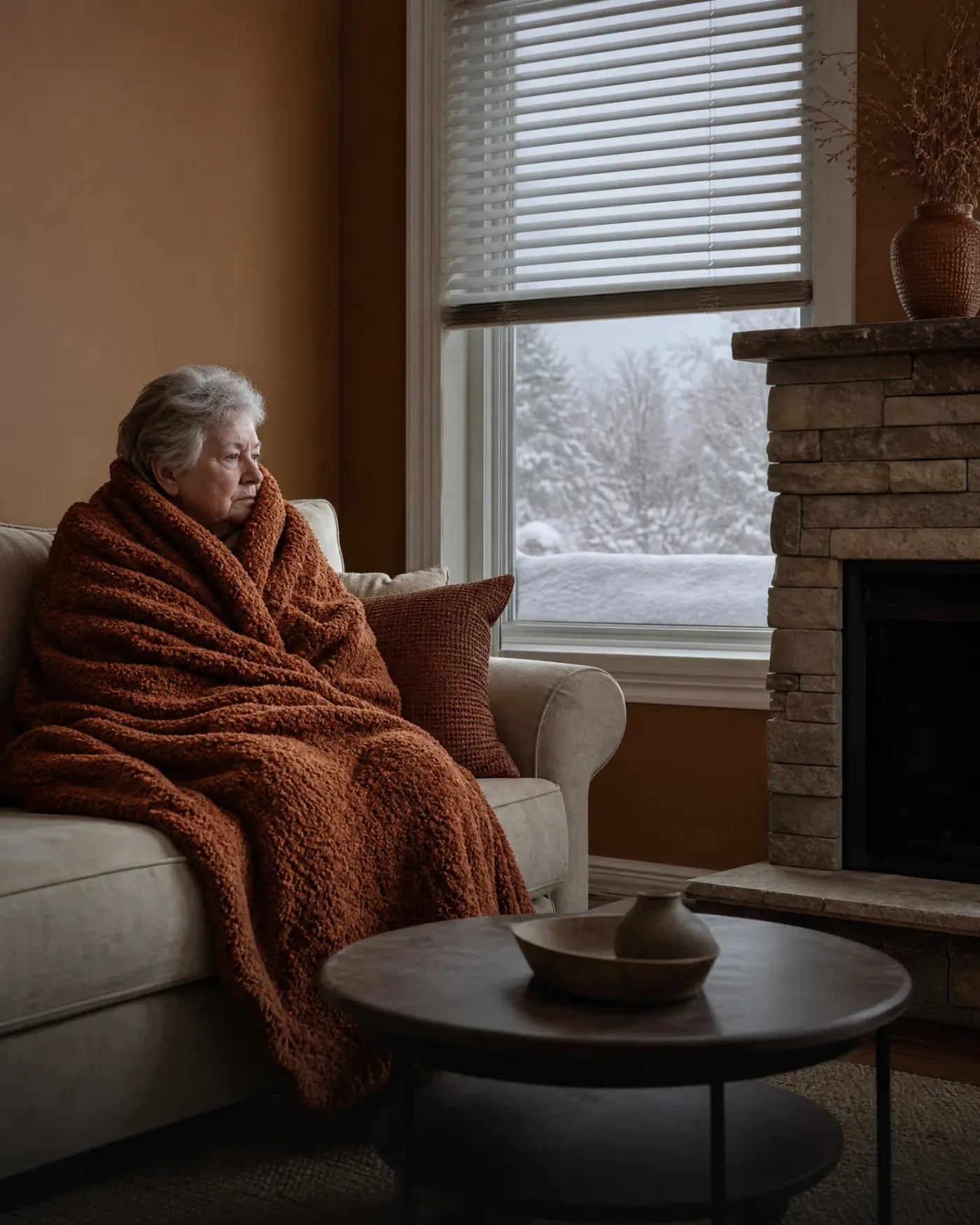
Why your furnace keeps turning on and off in New Jersey
Why does my furnace keep turning on and off?
A furnace that fires up, runs for a few minutes, then shuts off and starts again soon after is called short cycling. In a New Jersey winter, with gas heat running for months straight and power rates among the highest in the country, a furnace doing this isn't just annoying. It's working harder than it should and costing more to keep the house warm while it does it.
A dirty filter or a cracked heat exchanger is usually the cause
Short cycling almost always comes down to the furnace overheating or sensing something is wrong, then shutting itself off as a safety measure. A clogged air filter is the most common reason. It blocks airflow, the heat exchanger gets too hot, and a limit switch cuts the burners before the house is actually warm. A flame sensor covered in residue, a thermostat in the wrong spot, or a furnace that was sized too large for the house can all do the same thing. On a cracked heat exchanger, the shutdowns happen because the furnace is detecting a real fault, not a minor one. Either way, a furnace that cycles this way runs its blower and burners far more often than a working system does, which shows up on the gas and power bill before winter is over.


What's Actually Causing the Cycling
- A dirty flame sensor fails to prove the flame to the control board, so the burner shuts off seconds after it lights.
- A clogged filter starves the furnace of return air, and the limit switch shuts the burner off before the heat exchanger overheats.
- An oversized furnace heats the house fast, hits the thermostat setting, and shuts down long before the normal cycle would end.
- A cracked heat exchanger can trip the same limit switch that a dirty filter does, so the same symptom has two different causes.
- A failing inducer motor won't pull enough exhaust through the vent, and the pressure switch stops the burner before gas is allowed to flow.
- Ductwork that's partly blocked or closed off raises pressure in the system enough to trip the limit switch the same way a dirty filter does.
Most of these causes trace back to one of two parts: the flame sensor or the limit switch, and they fail for different reasons. The flame sensor is a thin metal rod that sits in the burner flame. It proves to the control board that gas is actually burning. Dust and carbon build up on it over months of use, and once the coating is thick enough, the sensor can't read the flame anymore. The board assumes the gas isn't lit and shuts the burner down as a safety measure, then tries again a minute later. That's one cycle.
The limit switch works differently. It watches the temperature inside the heat exchanger and shuts the burner off if it gets too hot. A dirty filter, blocked ductwork, or a failing inducer motor can all starve the system of airflow, and when air can't move through fast enough to carry heat away, the exchanger overheats and trips that switch. A cracked heat exchanger can trip it too, even with clean air flowing, because the crack lets heat build up somewhere it shouldn't.
An oversized furnace doesn't trip anything. It just has more heat than the house needs, so it satisfies the thermostat in a few minutes and shuts down on its own. Same symptom, no failing part at all.
A contractor who services furnaces in New Jersey all winter can usually tell which of these it is within a few minutes of looking at the unit.




Hand off the furnace problem
A furnace that keeps shutting off and relighting doesn't fix itself, and running a blower motor through dozens of extra cycles a day adds up on a New Jersey power bill that's already steep. Left alone, short cycling also wears out the parts causing it faster, the igniter, the flame sensor, the limit switch, so a small fix now tends to beat a bigger one later. Sorting out which part is behind it means someone looking at your furnace, not guessing over the phone. A local contractor who services furnaces through New Jersey winters has likely seen this exact model misfire this exact way before, and sends one technician to look at it rather than a string of callbacks from different companies. You've already got the cold spots and the noise figured out. What's left is getting the right person to your furnace before the next cold snap, and that's what the request above starts.
Why the limit switch reacts so fast
The limit switch sits near the heat exchanger and reads its temperature. When airflow drops because of a clogged filter or a blocked vent, the heat exchanger climbs past what the switch allows and it cuts the burner before the blower has a chance to catch up. That is why short cycling often starts gradually. A filter that is half blocked still lets the furnace run, just with shorter and shorter cycles as it gets worse. By the time the furnace is shutting off every few minutes, the filter is usually well past due for a change.
The flame sensor has one job
A flame sensor is a thin metal rod that sits in the burner flame and proves to the control board that gas is actually igniting. It works by reading a tiny electrical signal through the flame itself. Soot and oxidation build up on that rod over a heating season and weaken the signal until the board can no longer tell a flame is lit, even though it is. The board responds the only way it can, by cutting gas to the burner. That single rod, not the burner or the gas valve, is behind a large share of short cycling calls in New Jersey homes once the furnace has run a few months straight.
Winter nights average 26°F statewide
At 26°F, your thermostat is calling for heat most of the night, so a furnace that short cycles doesn't just click off and on a few extra times. It's doing that all night, every night, for months, which is why the symptom shows up so fast on a cold snap.
NOAA nClimDiv 1991-2020 county normals weighted by homes
A furnace that short cycles has a reason, and it's almost always one of a short list: a dirty flame sensor, a clogged filter, a cracked heat exchanger, a bad limit switch, a thermostat in the wrong spot. Finding which one it is means checking the furnace in front of you, not guessing from a description over the phone. That's where a local contractor matters. Someone who works on furnaces around New Jersey all winter has seen this pattern enough times to know what to check first, and what tends to fail on the equipment common here. Send the request and you're handed to one licensed contractor, not a handful of companies competing for the job. No flood of calls to sort through, just someone who can get to your furnace and look at it. Your furnace is cycling for a reason. Once someone's in front of it, that reason stops being a mystery and starts being a repair.





Let someone else find the pro
The pro who reaches out is licensed in New Jersey.
It costs nothing to send, and you don't have to hire anyone.