No heat for hours
A furnace stuck blowing cold air can run that way until someone shuts it down. Leaving it on wastes the gas it's pulling with every cycle.
Stop chasing a furnace pro
Cold air coming out of your vents usually means the burners never lit, even though the blower is running fine. Sometimes it's the igniter, sometimes it's the gas valve or a clogged filter choking the system. This page walks through what causes it and what to check before the furnace needs a tech. If you'd rather hand it off, submit the form and a local New Jersey contractor who works on furnaces all winter will take it from here.
Let a pro reach outCold air blowing from your vents almost always means the blower is running but the burners never fired. The blower and the burners are controlled separately, so a furnace can push air through your ducts all day without ever actually heating it. Most furnaces in New Jersey run on gas, and gas furnaces need a spark or hot surface igniter, a working flame sensor, and an open gas valve all lined up before the burners light. If any one of those fails, the system doesn't shut down. It just keeps blowing room temperature air, which feels cold once your house drops into the 60s. A dirty flame sensor is one of the more common reasons this happens, since it can't tell the control board a flame is there even when one lights briefly. A clogged filter can also starve the burners of airflow until the system shuts them off as a safety measure. None of this is something to leave alone through a New Jersey winter. It needs a licensed technician to find which part failed and fix it.


Start a furnace and the inducer motor runs first, clearing the heat exchanger before any gas shows up. A pressure switch confirms that draft is moving. If a vent pipe is blocked or the motor is weak, that switch never closes and gas never gets released. Once it does close, the igniter heats up or sparks, and gas reaches the burners. The flame sensor has only a few seconds to confirm a flame is actually there. No confirmation, no gas. The control board shuts the valve and tries again, or locks out. None of this involves the blower. A separate sensor has to read the heat exchanger as warm before the blower turns on, so even a full ignition failure can end with air moving through your ducts, just never heated. The part that fails most often isn't the igniter itself. It's the flame sensor, and it fails from doing its job. The same combustion byproducts the burners produce settle on the sensor rod over weeks of normal use, until it can no longer tell the control board a flame is there at all.




A furnace stuck blowing cold air can run that way until someone shuts it down. Leaving it on wastes the gas it's pulling with every cycle.
A furnace tech checks the igniter, the gas valve and the pressure switch in order, because a blower that runs without heat usually traces back to one of those three.
A furnace that blows warm air for a while and then turns cold partway through a cycle isn't the same problem as one that's cold from the start. Something is shutting the burners off mid-run while the blower keeps going, and whatever caused it is likely to happen again the next cycle too.
A furnace has a high limit switch that watches the temperature inside the heat exchanger. If airflow through the ducts is restricted, a dirty filter, a closed vent, return air blocked by furniture, heat builds up faster than the blower can carry it away. Once that switch senses the exchanger getting too hot, it cuts gas to the burners to protect it, but it leaves the blower running to cool things down. That's the cold air you feel. The furnace will often try to fire again once it cools, then trip the same switch again. In New Jersey winters, a furnace cycling like this for even a few hours is burning gas without heating your house, and the limit switch tripping repeatedly can point to a cracked heat exchanger underneath it.
Thermostat calls for heat and signals the control board to start.
Inducer motor spins up and purges the heat exchanger of leftover exhaust.
Pressure switch confirms draft before the board allows any gas flow.
Igniter heats up or the pilot lights to prepare for ignition.


A furnace stuck blowing cold air in January isn't something to watch for a few days in a New Jersey house. Gas is still flowing to burners that aren't lighting, so the bill climbs while the rooms stay cold, and in the meantime you're relying on space heaters at a time when New Jersey's electric rates are among the highest in the country. The fix usually comes down to one part: the igniter, the gas valve, or a pressure switch reading a blocked vent. Finding which one takes someone who works on furnaces all winter long, not a guess. Send the request through and it goes to one licensed New Jersey contractor who handles this equipment regularly, not a handful of companies competing for the callback. That's one call to arrange instead of several to screen, while your house sits there cold and the burners stay off.
Winter nights statewide average 26°F, according to NOAA climate data for New Jersey. At that temperature your furnace isn't running an hour here and there, it's cycling on and off most of the night to hold the house steady. That's a lot of ignition attempts, and the igniter and pressure switch are the parts doing that work over and over. When one of them starts to fail, it usually shows up overnight first, you'll notice the air from the vents turning cold while you're asleep and the house cooler than it should be by morning, even though the thermostat never changed.
NOAA nClimDiv 1991-2020 county normals weighted by homes
You can hear the blower running, maybe feel air moving out of the vents, but it's not warm. Hold your hand up to a supply vent and it feels like room temperature at best, sometimes cooler. The thermostat might still read the set temperature while the rooms drift down a degree at a time. Some households notice it first at night, when the bedrooms get noticeably colder than the thermostat on the main floor suggests. If the furnace keeps running like this, you're paying for gas it's using to try to ignite, plus whatever space heaters or extra layers you add to make up the difference, while the house still doesn't warm up.

Warm air moves through the ductwork at every register, and the condensate line is draining the way it's built to. A furnace running right doesn't make you think about it. You set the thermostat and the house catches up.

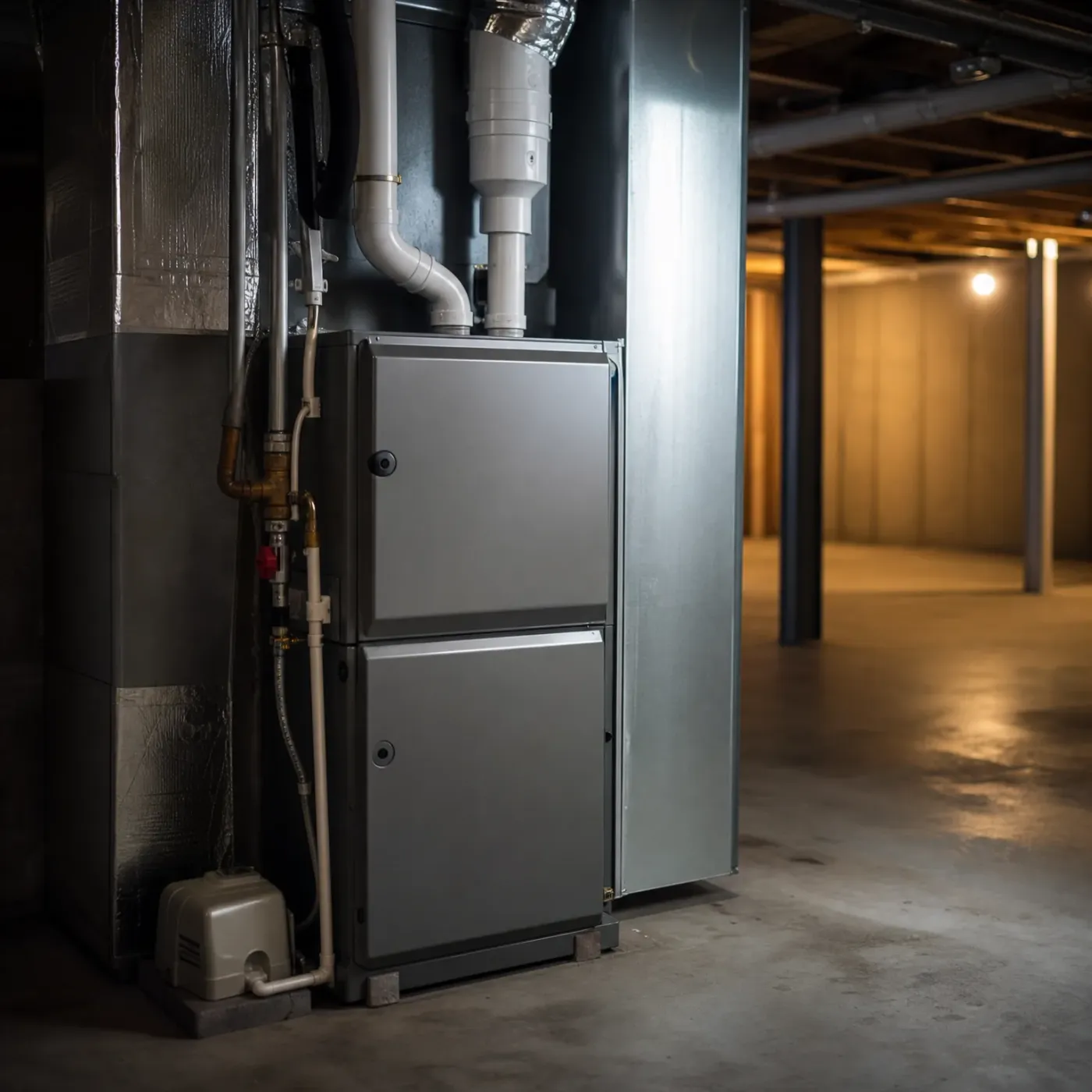
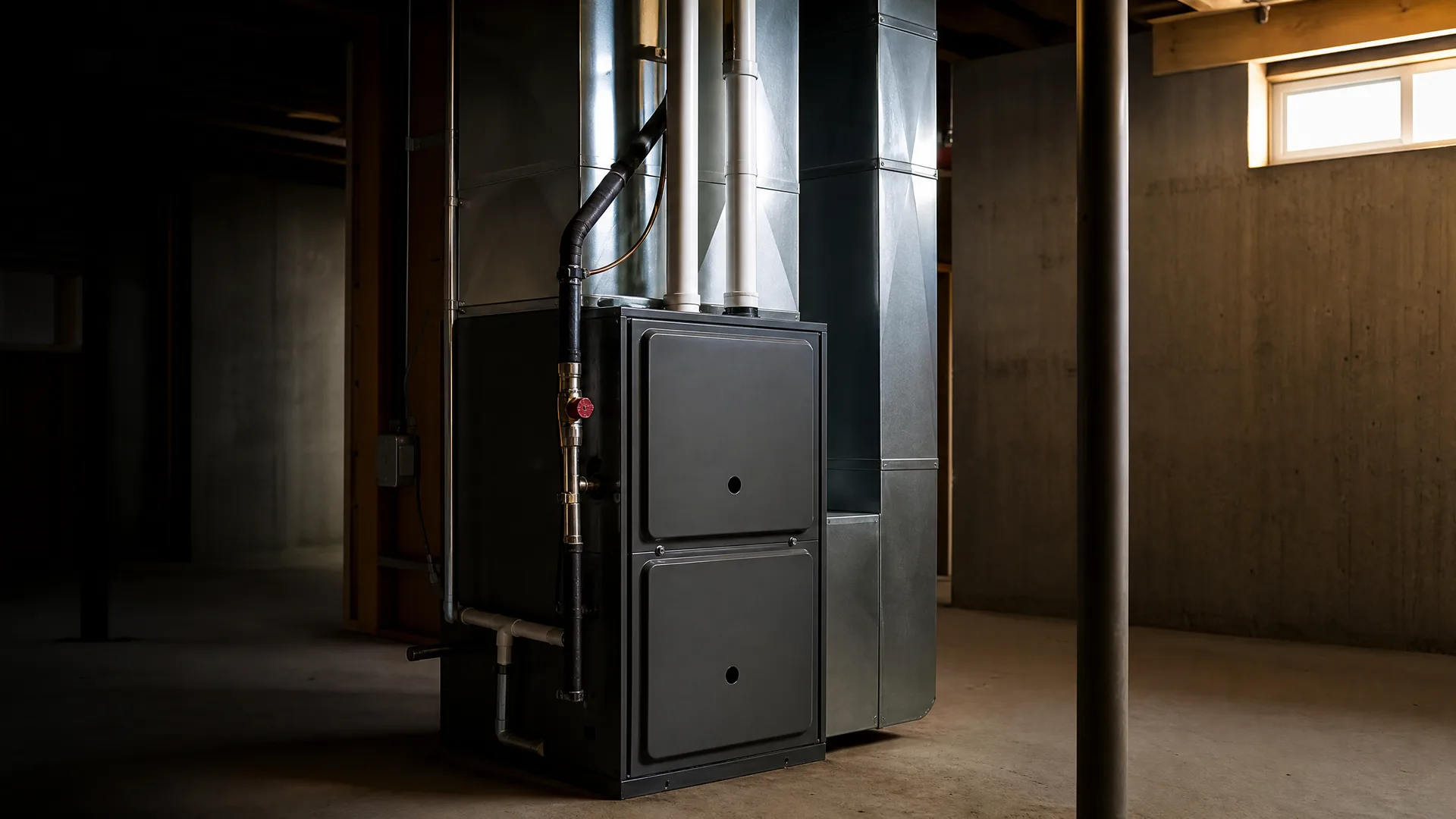
This one's older, and age alone doesn't mean trouble, but a furnace this size has a lot of parts that can stop the burners from lighting. If the blower's moving air and the rooms still aren't warming up, something upstream of the burners quit.
At 26°F, your furnace isn't just warming the house once and coasting. It's cycling on and off most of the night, so the igniter has to fire again and again. Each failed attempt is another stretch of cold air instead of heat.
NOAA nClimDiv 1991-2020 county normals weighted by homes
A furnace blowing cold air isn't dying, it's not lighting. Somewhere in the sequence between the thermostat calling for heat and the burners actually firing, something is stopping short: the igniter isn't glowing hot enough, the gas valve isn't opening, or the pressure switch isn't sensing the draft it needs before it lets gas through. The blower keeps running regardless, which is why you still feel air moving and still think the system is working in some partial way. It isn't. Until the burners light, every cycle is just cold air pushed through your ducts while gas meters tick and the house stays where it started.
Finding which part stopped the sequence takes someone who's inside furnaces like yours all winter, not just once. New Jersey winters run cold enough that furnaces here cycle on and off most of the night, which means local techs see igniters, gas valves and pressure switches fail in a pattern. That's not guesswork, it's the part that tends to go first in houses on your kind of system, and it's why a single visit can usually find it.
You're matched with one licensed contractor in New Jersey, not a handful of companies competing for the job. That means one visit, one diagnosis, and someone who already knows what usually fails before they open the cabinet. The house doesn't have to stay cold while you sort through quotes. It just has to get checked.
Finding a pro stops being your job