Still doing the job
This furnace sits on a plain concrete floor, ducts and pipes tied in clean. No rust climbing the cabinet, no scorch marks near the burner. A furnace built like this, kept up, still has winters left in it.

One form, no calling around
A furnace that struggles in January isn't always worth fixing, and this page walks through the signs that tell you which way yours is headed. Short cycling, a yellow flame, rooms that won't hold heat, a bill that jumped for no reason. Skip the round of calling contractors and explaining the problem over and over. One licensed New Jersey furnace tech, matched to you, who sees this exact breakdown every winter.
Skip the searchA furnace that can't make it through a New Jersey winter usually tells you before it quits outright. The burner flame turns yellow or flickers instead of burning steady blue. The blower runs almost constantly, or it shuts off and restarts every few minutes because the heat exchanger is cracked or the limit switch is tripping. Some rooms stay cold no matter how high the thermostat goes, which means the furnace can't push enough heat through the house anymore. You hear a bang or rattle when it kicks on, which is usually a sign the ignition system is wearing out. And the gas bill climbs even though you haven't changed the thermostat, because an aging furnace burns more fuel to produce the same heat. Any one of these on its own might be fixable. Several together, especially once temperatures drop into the 20s, mean the furnace is working harder than it should to keep up, and that's when a cold snap is most likely to be the thing that finally breaks it.

Every time the burner fires and shuts off within a few minutes, the heat exchanger goes through a quick swing from cold to hot and back. Metal expands and contracts with that swing. Do it enough times over a winter and the seams and welds are what give out first. A furnace that short cycles in December is putting more stress on that part in one season than a furnace running normal full cycles sees in several.

A gas burner should run a steady blue flame. Yellow or flickering means combustion isn't complete, and that points to a dirty burner, a cracked heat exchanger, or a venting problem pulling the wrong amount of air into the firebox. None of those fix themselves, and a furnace running on bad combustion is working harder to put out the same heat, which shows up as higher gas use before anything actually fails.
Walk into the furnace room and check what your senses tell you. A burning dust smell the first few times it fires each winter is normal. A smell that doesn't go away, or one that's sharper, like hot metal or something electrical, isn't. Look at the floor and walls near the unit for soot, a fine black dust that settles on nearby surfaces. Listen for a boom or thump when the burner lights, instead of a soft whoosh. Check if the area around the furnace feels warmer than it should, or if there's any scorch mark near the cabinet. These point to a cracked heat exchanger or a burner that isn't firing right, and in a house that depends on gas heat through a New Jersey winter, that's not something to leave until spring.






Most of what decides whether a furnace makes it through winter happens in a sequence, and each step has to pass before the next one starts. The inducer motor has to prove there's draft before the igniter even tries. If that motor is grinding or slow to spin up, the igniter never gets its turn. The igniter itself might glow but not hot enough, so the furnace tries again, and again, before it gives up for that cycle. Once the burner's lit, the limit switch is watching cabinet temperature, and it'll cut the burner if things run too hot, which often points at a blower that isn't moving enough air rather than the switch itself. A pressure switch clicking with no inducer running usually means something's blocking the vent pipe outside, not a switch that's gone bad. And if the exchanger cracks, the furnace is built to notice and shut itself down rather than keep running. A furnace still running on a standing pilot, with no igniter at all, is old enough that the rest of it is usually close behind.



Only one pro gets your request, so you hear from one company.
Explain the job once and skip repeating it on every call.
Sending the form costs nothing.


A furnace that's borderline can sometimes finish out the winter with a repair, if the heat exchanger is sound and the parts failing are the igniter, the blower motor, or a control board.
A furnace with a cracked heat exchanger or a cabinet rusting through isn't worth that repair, because the part failing is the furnace itself, not something bolted to it.
On a typical night this time of year, your furnace isn't just topping off the house, it's fighting a 26 degree gap outside. That's the average overnight low here in December, January and February. A furnace that's already struggling has to run longer and harder to close that gap, and that's when a weak part gets found out.
NOAA nClimDiv 1991-2020 county normals weighted by homes
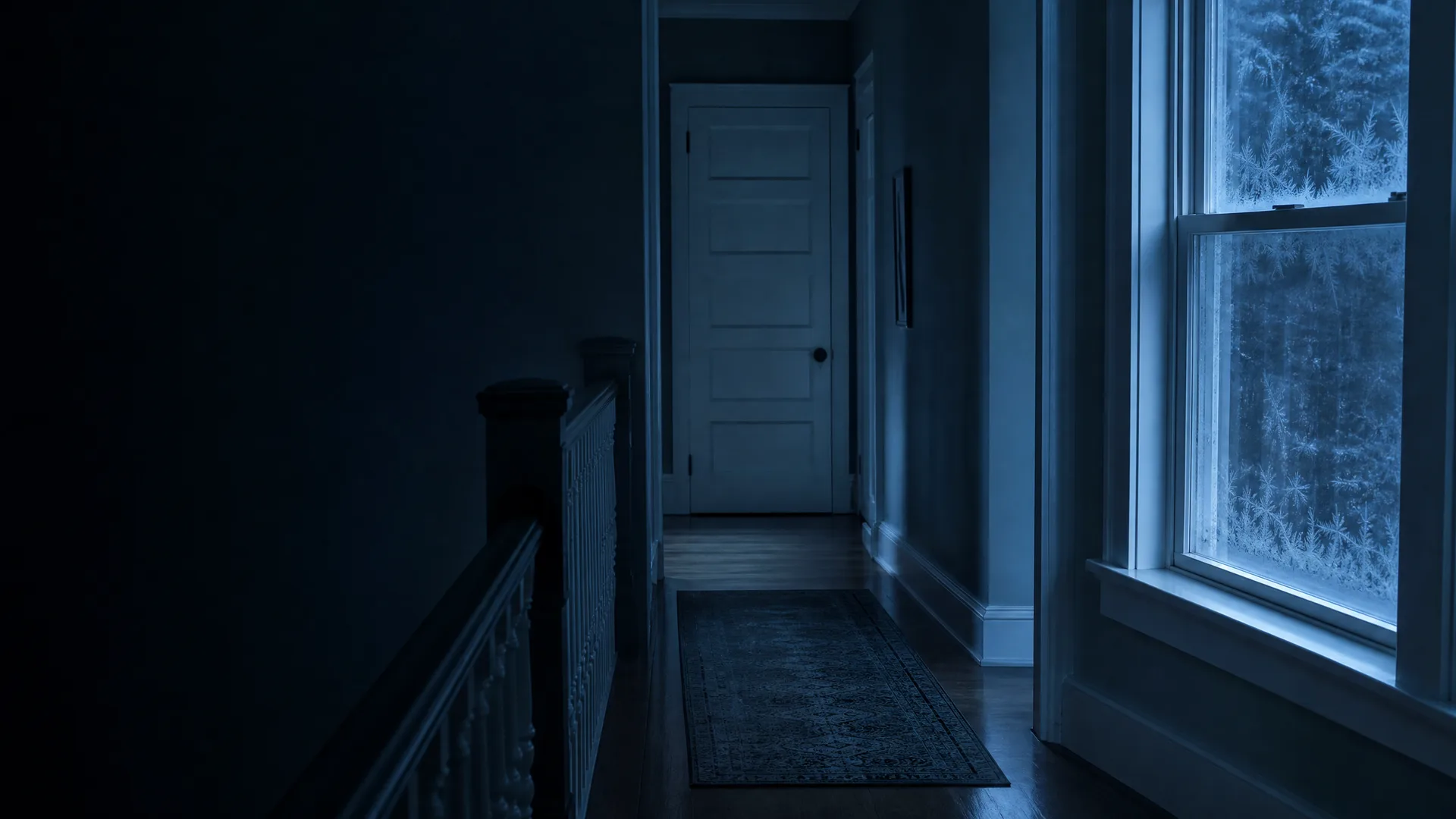
You wake up around 2 a.m. because something feels off, though it takes you a second to place it. The house is too quiet. No air moving through the vents. You walk the hallway in sock feet and the floor is cold under you in a way it shouldn't be. The window at the end of the hall has frost creeping up from the sill, the glass lit faint blue from the streetlight outside. You hold your hand over the vent and feel nothing. Somewhere below you the furnace sits dark, and outside it's deep January, the kind of New Jersey night that doesn't forgive a system that's already been struggling to keep up.
You notice it most on a cold morning. The thermostat clicks on, the blower starts, and for a stretch you're getting air that feels colder than the room, not warmer. You go check the vent with your hand just to be sure you're not imagining it. It happens every cycle, and you're trying to figure out if that's just how furnaces work or a sign yours is starting to fail.
When your furnace starts, the blower kicks on to push air through the ducts before the burner has had time to heat the exchanger all the way through. That first rush of air feels cool because it's moving past metal that hasn't caught up yet. It should pass in under a minute once the burner's been running. What's not normal is cold air that lasts well into the cycle, or air that stays lukewarm the whole time the furnace runs. That points to a burner not firing fully, a thermostat miscommunicating with the ignition sequence, or a blower running when it shouldn't. In a house heated by gas, that's worth having looked at before the next hard freeze.
Statewide, winter nights average 26°F, according to NOAA climate data. That's the temperature your furnace is working against most nights from December through February, not the daytime high. A furnace that's sound handles that gap by running longer, not harder. One that's already weak starts short cycling under that kind of load, or the blower runs and runs without the house ever quite catching up. You'll notice it as a room that stays a few degrees cooler than the thermostat setting, or a furnace that seems to run most of the night. The colder it gets outside, the faster a weak unit shows you where it's failing.
NOAA nClimDiv 1991-2020 county normals weighted by homes

This furnace sits on a plain concrete floor, ducts and pipes tied in clean. No rust climbing the cabinet, no scorch marks near the burner. A furnace built like this, kept up, still has winters left in it.

Rust has worked into the cabinet seams and up the side of the unit. Once metal like that starts going, a repair patches one failure while the next one is already forming somewhere else on the case.

A steady blue flame, normal cycling, a sound heat exchanger and a cabinet with no rust through the metal mean a repair is worth doing. A yellow flickering flame, short cycling, a cracked heat exchanger or a cabinet rusting through mean you're looking at replacement, no matter which single part failed first. Everything on this page points toward telling those two apart before the next cold snap, not after the blower quits at 2 a.m.
Once you know which one you're dealing with, the next step is getting someone qualified to look at it, not a string of estimates from companies that don't know your furnace or your house. You'd otherwise be the one calling around, explaining the same symptoms to three different voices, and sorting through quotes that don't quite match up. A licensed contractor near you who works on furnaces all winter can look at what you've described here and tell you straight whether it's a repair or a replacement, without you doing that legwork yourself.


Explain it one time