
NJ Furnace Pros
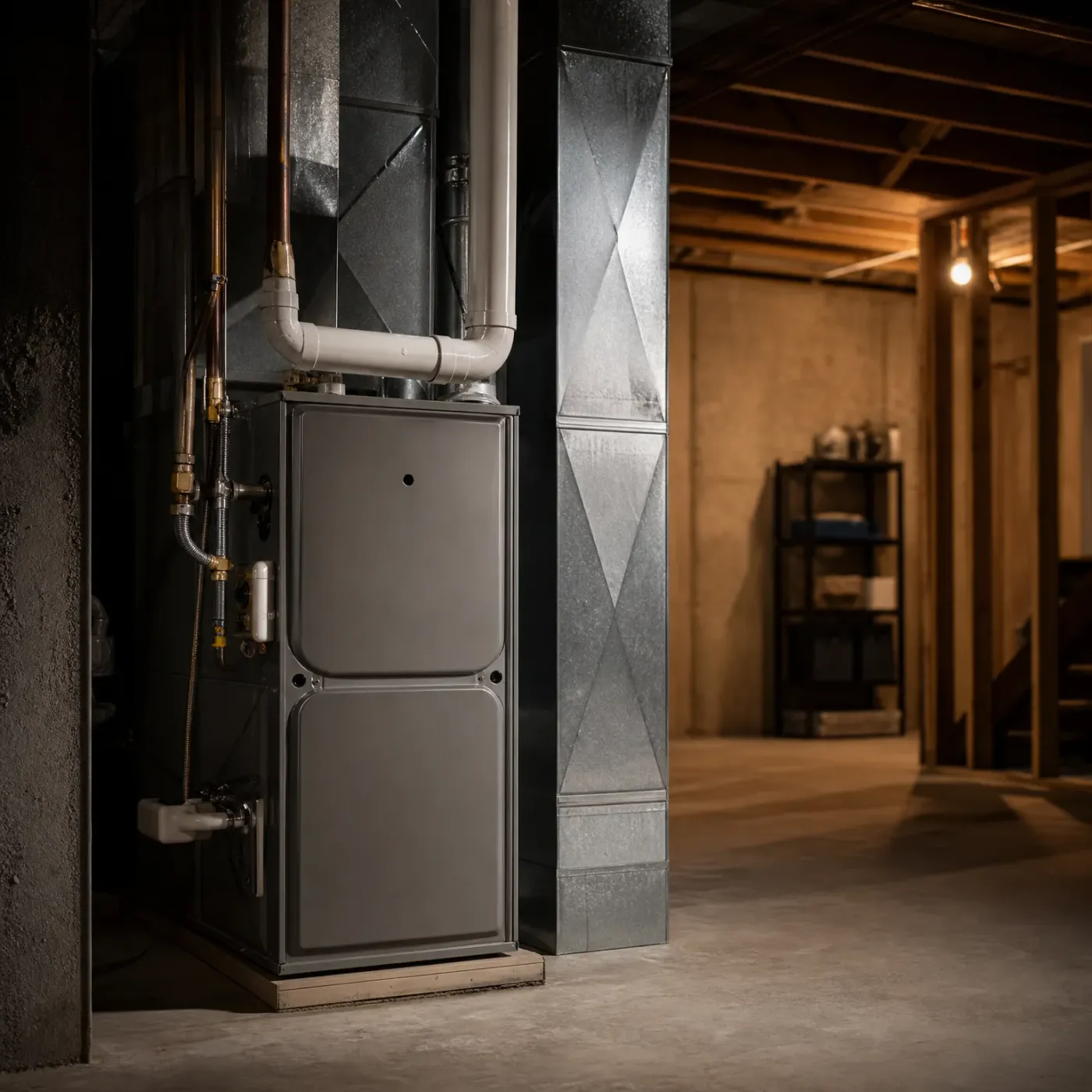
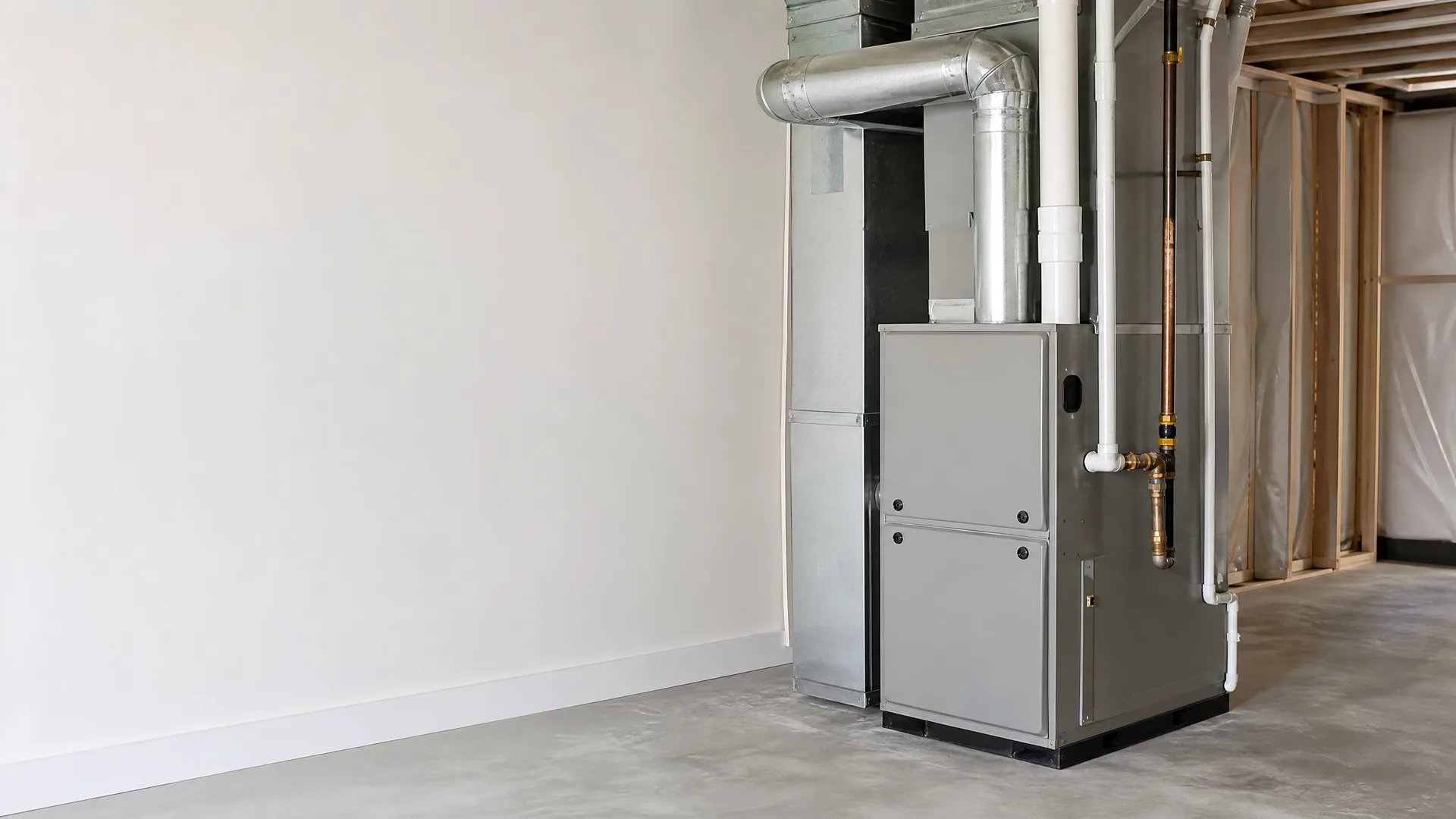
A gray gas furnace with copper and PVC piping stands beside large galvanized sheet-metal ductwork in an unfinished basement with concrete floor, wood framing, and a glowing bare bulb in the background.

A pro who works on furnaces

Is a high-efficiency gas furnace worth it in New Jersey

You're paying New Jersey gas prices to heat the house and want to know if a high-efficiency furnace actually changes that. It depends on what furnace you have now, your gas line and venting, and how long you plan to stay in the house. This page gets into what high efficiency means, what it takes to install one, and what a local contractor would look at in your home before you decide.

Get a local pro

Yes, for most houses in New Jersey, because almost every home here heats with gas and a 95% or higher furnace burns less of it than the 80% unit most older houses still have. The difference comes from a second heat exchanger that pulls more warmth out of the exhaust before it leaves the house, instead of sending that heat up the flue. That gas savings adds up over a full winter of running, not a mild stretch of it. The catch is what it takes to get there. A high-efficiency furnace vents through PVC pipe out a sidewall, not up the old metal flue, so the install can mean new venting and sometimes a condensate line to drain the moisture it pulls out of the exhaust. If your gas line and venting can take it without major rework, the switch pays you back in lower bills for as long as you stay in the house. If they can't, the furnace itself is still worth it, but the install costs more to get there.

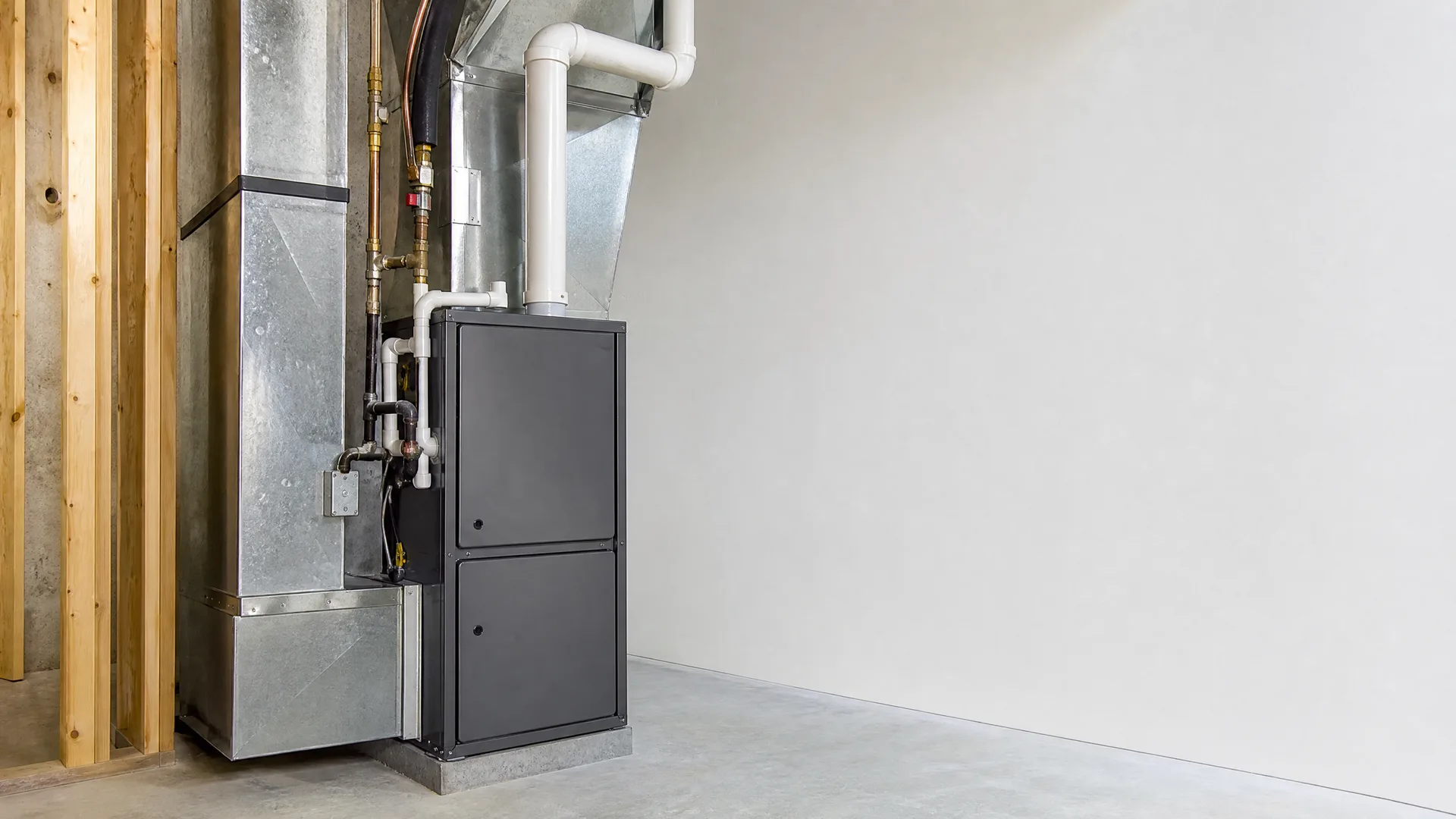
A dark gray furnace connected to galvanized sheet-metal ductwork, white PVC vent pipes and copper piping, standing against a plain light wall in a room with a bare concrete floor and exposed wood framing at left.

Where the other 20 percent goes

An 80% furnace sends the rest of that gas straight out the flue as heat, because the exhaust has to stay hot enough to rise on its own through a metal vent pipe. A 95% furnace cools the exhaust down low enough to vent it through PVC pipe with a small fan, and that heat it pulled out along the way is the gas you're not paying for twice.

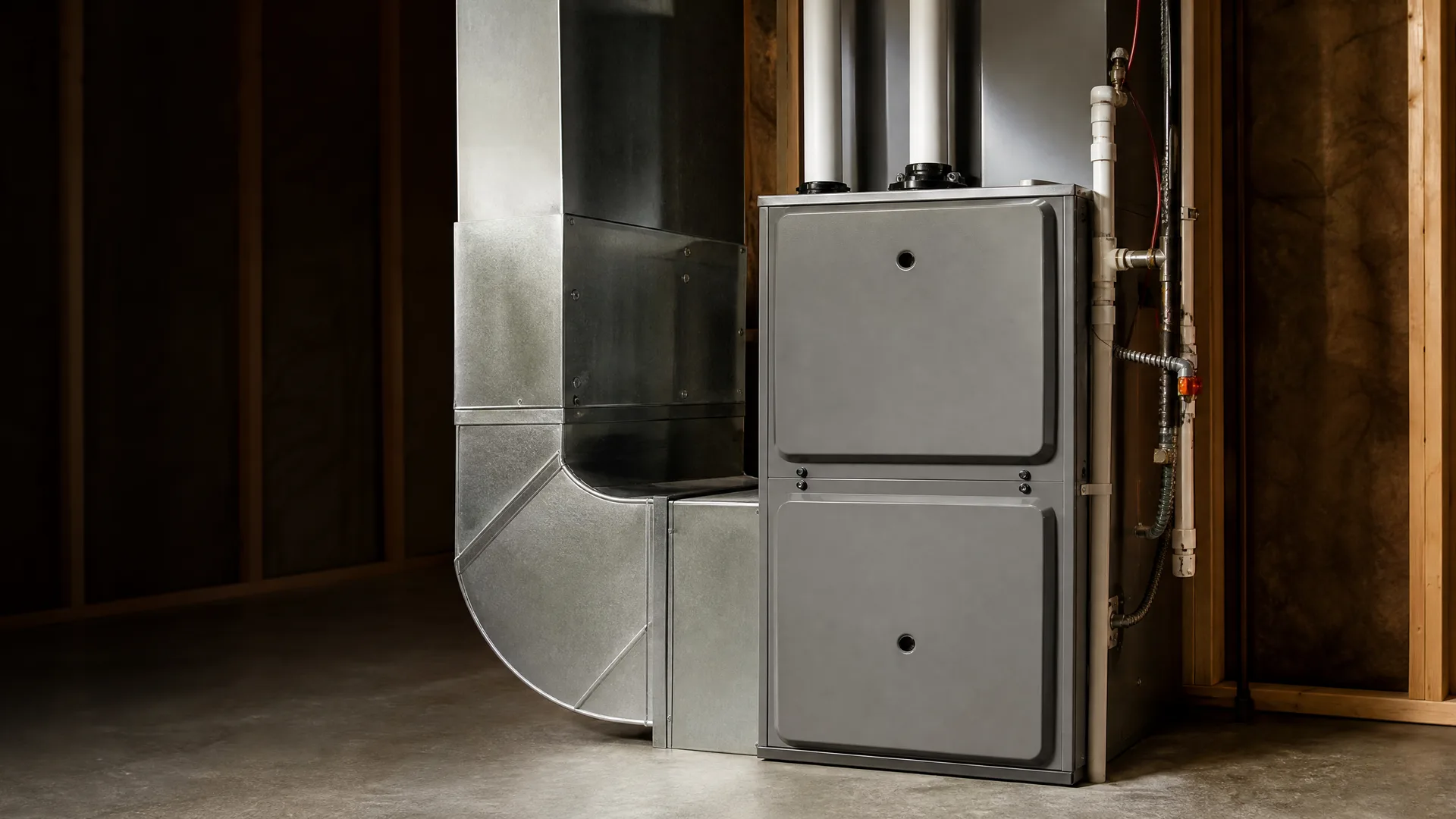
A gray high-efficiency furnace with sheet-metal ductwork, white PVC vent pipes and copper piping stands against a wall in an unfinished basement with a concrete floor and insulated wood stud framing at right.

What that second exchanger needs

Pulling that much heat out of the exhaust creates condensation, so a 95% furnace needs a condensate line and somewhere for that water to drain. It also vents through the sidewall instead of up through the roof or a chimney. If your house was set up for an 80% furnace, a contractor has to run new PVC venting and a drain, not just swap the unit in the old spot.

80% Furnace vs 95%+ Furnace

Standard 80% furnace

  • Vents through a metal flue pipe that relies on hot exhaust rising on its own, which is why it needs a chimney or vertical vent.
  • Installation usually costs less upfront since the venting is often already in place from the furnace it replaces.
  • Burns more gas per hour to produce the same heat, so the New Jersey gas bill runs higher through the winter months.
  • Works fine in a house where the existing venting is metal and in good shape, since no new vent line has to be run.
  • Has one heat exchanger, so more of the heat from burning gas leaves through the flue instead of into the house.

95%+ furnace

  • Vents through PVC pipe run horizontally through a wall, since the exhaust is too cool to rise on its own through a metal flue.
  • Needs a condensate drain line to carry off the water the second heat exchanger pulls out of the exhaust.
  • Installation can cost more if the house has no PVC venting in place and a new line has to be run to the outside.
  • Burns less gas for the same heat output, which matters most in a state where gas is the main way most houses heat.
  • Has a second heat exchanger that pulls additional heat out of the exhaust before it leaves the house.
  • Makes the most sense for someone planning to stay in the house long enough for the lower gas use to add up.
A gray furnace cabinet in a basement with sheet-metal ductwork, white PVC vent pipes, and black gas piping against a concrete wall and wood-framed partition on a bare concrete floor.

A standard furnace in good shape

This is an 80% furnace doing what it's supposed to do. It vents through the metal flue, the duct and gas lines run clean, and there's no rust or strain anywhere. If yours looks like this, it's earning its keep and there's no reason to replace it early.


A gray metal furnace with two white PVC vent pipes stands on a concrete floor beside galvanized sheet-metal ductwork in a basement or utility space with wood framing.

A furnace near the end

Surface rust on the cabinet, an older plenum showing its age. A high-efficiency furnace in this shape has likely been venting through PVC for years already. Once a furnace looks like this, the question isn't whether to replace it, it's what to replace it with.

What's your furnace telling you right now

Go look at it. If the flue pipe is warm to the touch and you can hear the burners roar on for a long stretch before the house feels warmer, that's an 80% furnace doing what 80% furnaces do, paying to heat the outside through a metal pipe. Check your gas bill from January against one from July. If the January number makes you wince, that gap is mostly this. Rust around the flue connection or a furnace that short-cycles, kicking on and off every few minutes, means it's working harder than it should. None of that means it's unsafe to run. It means the gas you're buying is doing less than it could.

A woman with long gray hair wrapped in a checked blanket sits on a sofa by a window with yellow autumn foliage outside, with a lamp, framed picture and plant in the background.
An older woman in a cream knit sweater sits on a sofa by a window, looking out at sunlit trees with yellow and orange autumn leaves, with a bookshelf and lamp behind her.
A woman with gray shoulder-length hair in a dark knit sweater sits on a cushioned seat by a window, looking out at yellow autumn foliage, with a living room, armchair, houseplant and framed picture behind her.
An older woman with gray hair in a bun, wearing a cream knit sweater, sits on a sofa with a gray blanket and looks out a large window toward yellow-green autumn trees, with a lit table lamp and dark armchair behind her.

Get your furnace to the right pro

If you went and looked at your furnace and saw what the page described, that gas bill isn't going to change on its own. A 95% furnace vented through PVC instead of a metal flue is a different installation, not just a different unit, and that's where a local contractor earns their keep. Someone who installs these every winter in New Jersey has seen what happens when a house has an older gas line or no easy spot for the PVC vent, and knows before they show up what questions to ask. You get matched with one contractor local to you, not a handful competing for your attention, and they'll look at your actual setup, your venting, your gas line, before telling you what it would take. With gas prices and New Jersey power rates both working against you, finding out what a 95% furnace would actually mean for your house is worth doing before next winter, not during it.

How the second heat exchanger changes everything

  • A 95% furnace uses a second heat exchanger made of stainless steel or polypropylene to pull extra heat from exhaust.
  • That lower exhaust temperature means the furnace can't vent through a metal flue, so it vents through PVC pipe instead.
  • A condensate drain carries off the water that forms when the exhaust cools, so the installation needs a drain line and often a condensate pump.
  • The inducer motor pushes exhaust out through the PVC rather than relying on hot gas rising on its own up a chimney.
  • Two-stage and modulating models run longer at a lower fire instead of cycling on and off at full output.
  • The combustion air intake is usually sealed and ducted in from outside rather than pulled from the room around the furnace.

A standard furnace burns gas once and sends the leftover heat up the flue. A 95% furnace runs the exhaust through a second pass first, a heat exchanger built from stainless steel or polypropylene that can handle the moisture this step creates. Pulling that extra heat out drops the exhaust temperature low enough that a metal flue won't work anymore. Metal needs hot exhaust to keep rising on its own. What comes out of a 95% furnace is too cool for that, so it vents through PVC pipe instead, and an inducer motor pushes the exhaust out rather than letting it rise by itself. Cooling the exhaust that much also condenses water out of it, the same way a cold glass sweats on a humid day. That water has to go somewhere, so the installation needs a condensate drain line, and in a lot of basements that means a small pump to lift it to a drain. The combustion air works differently too. Instead of pulling air from the room around the furnace, a sealed intake duct usually runs outside, so the burners draw clean outside air rather than whatever's in the basement. Two-stage and modulating furnaces add one more change: instead of firing at full output and shutting off, they run longer at a lower flame, which is part of why the gas use drops with these units.

Winter nights average 26°F statewide

26°F is the average overnight low here from December through February, and most nights your furnace is working against that, not just a chilly evening now and then. A furnace that runs that often is one where a few extra points of efficiency add up fast.

NOAA nClimDiv 1991-2020 county normals weighted by homes

  1. Burners fire and send hot exhaust into the first heat exchanger.

  2. The blower pushes house air across that exchanger to heat it.

  3. Exhaust gas moves on into the second stainless steel heat exchanger.

  4. That second pass pulls more heat out before the gas cools further.

Why does a high-efficiency furnace need a condensate drain?

You've seen the specs mention a condensate drain and wondered why a furnace needs anything like that. Furnaces burn gas and make heat, not water, so a drain line sounds like something out of a water heater or an AC, not this. But a 95% furnace runs cool enough on the exhaust side that it does make water, and that water has to go somewhere.

It drains the water that condenses out of the exhaust

A standard 80% furnace keeps its exhaust hot enough that any moisture in it stays as vapor and goes out the flue as gas. A 95% furnace pulls so much heat out through that second heat exchanger that the exhaust drops below the point where water vapor turns back into liquid, the same way a cold glass sweats on a summer day. That water has to leave the furnace somehow, so it drips down into a drain line and out to a floor drain, a condensate pump, or a nearby pipe. The line has a slight tilt built into it on purpose. If it backs up or freezes, the furnace shuts itself off rather than let water reach parts that shouldn't get wet.

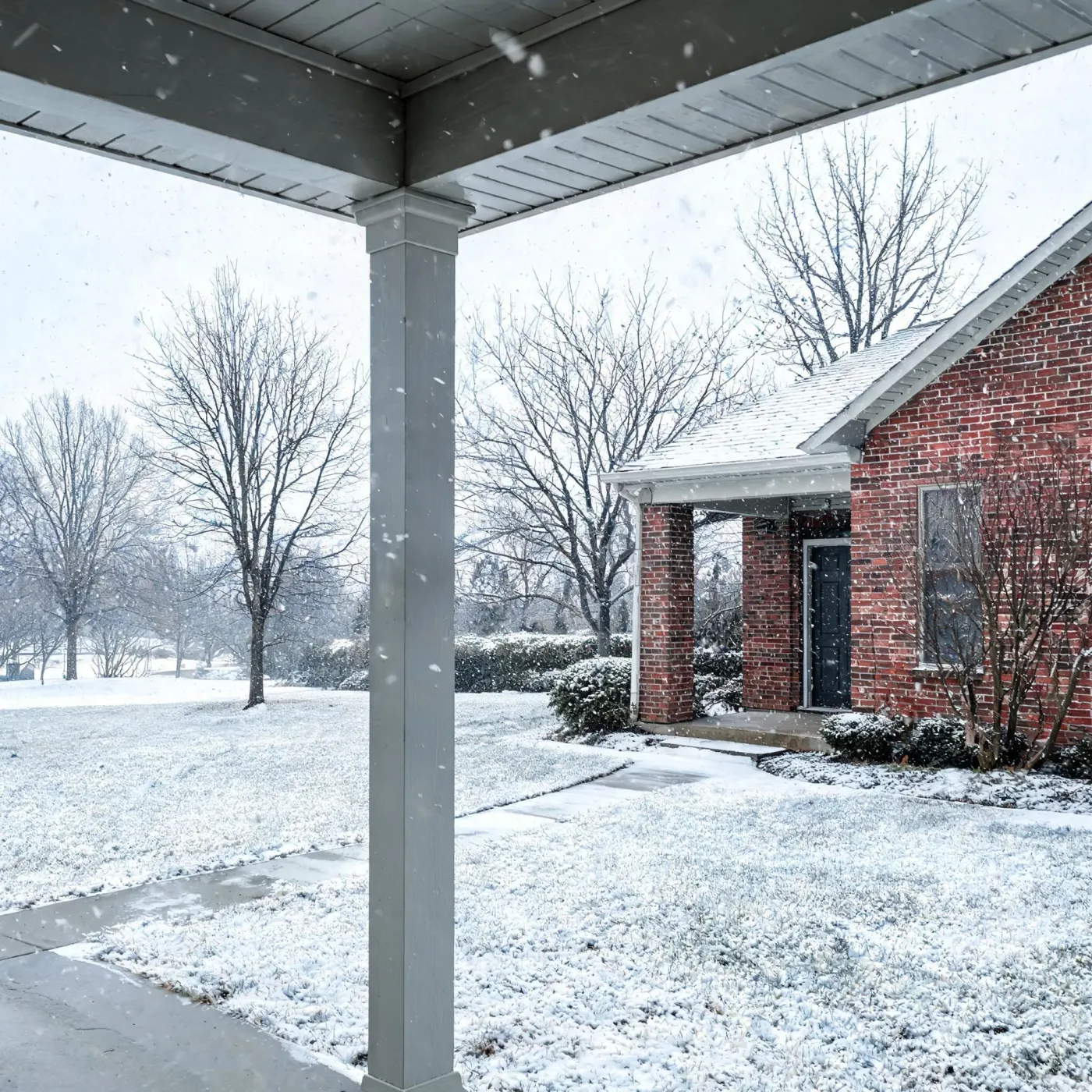
View from beneath a covered porch with a square white column toward a red brick house with a gabled entry, bare trees and shrubs, and snow falling on a snow-covered lawn and walkway.

New Jersey's winter nights average 26°F statewide, according to NOAA climate data. That's below freezing on most nights from December through February, and it means your furnace isn't just kicking on now and then, it's running long stretches to keep the house even close to comfortable. The colder the air coming in through the walls and windows, the longer the burners stay lit and the more gas gets used doing it. A furnace that's already stretched thin by New Jersey cold is one where a few points of efficiency matter more than they would somewhere milder. The same 26 degrees that makes your heating bill climb in January is the reason a 95% furnace earns its keep here instead of just sitting at a higher price tag.

NOAA nClimDiv 1991-2020 county normals weighted by homes

A beige high-efficiency furnace stands on a concrete basement floor beside sheet-metal ductwork, with white PVC vent pipes and a gas line running along an insulated wood-framed wall.
Clean burn, no rust, flue pipe intact. This furnace is still doing its job and doesn't need replacing yet.
An older metal furnace with a louvered front panel stands against a concrete basement wall, connected to sheet-metal ductwork and a flue pipe, with copper and steel pipes running alongside.
Dust caked on the cabinet, an aging burner compartment. A furnace this worn is the one worth swapping for a 95% unit.
A woman in a cream knit sweater sits in an armchair with her eyes closed and a slight smile, beside an open window showing orange autumn foliage, with a mug, books and a lit candle on a small side table.
An older man with gray hair and a beard leans back on a beige sofa with his eyes closed, in a sunlit room with potted plants, a wicker chair and large windows behind him.
A woman stands in the open front doorway of a single-story house with stone and wood siding while a man in a dark polo shirt and cap walks toward it along a concrete path.

Where that leaves you

A 95% furnace is worth it for most New Jersey houses that burn gas all winter, but whether it's worth it for your house comes down to your flue, your gas line, and how long you're staying put. Those are questions a furnace in a showroom can't answer. Yours can, once someone's looked at how it vents and what it's tied into.

That's the kind of thing a local contractor sorts out by actually seeing the install, not by guessing from a brochure. You'd be matched with one who works on furnaces in this area every winter and knows what a PVC conversion in a New Jersey house actually involves, and that's the one contractor who reaches out to you, not a handful of them competing for the job.

A speckled beige ceramic vase holding thin dried branches sits on a round wooden table near a window with sheer curtains, with a dark upholstered chair and draped blanket blurred in the background.
A gray high-efficiency furnace with two white PVC vent pipes stands in an unfinished basement beside galvanized sheet-metal ductwork, with insulated wood-framed walls and piping behind it.

The right pro for this job

Step 1 of 3: Equipment