Tell us about the job
Takes about a minute. No obligation.
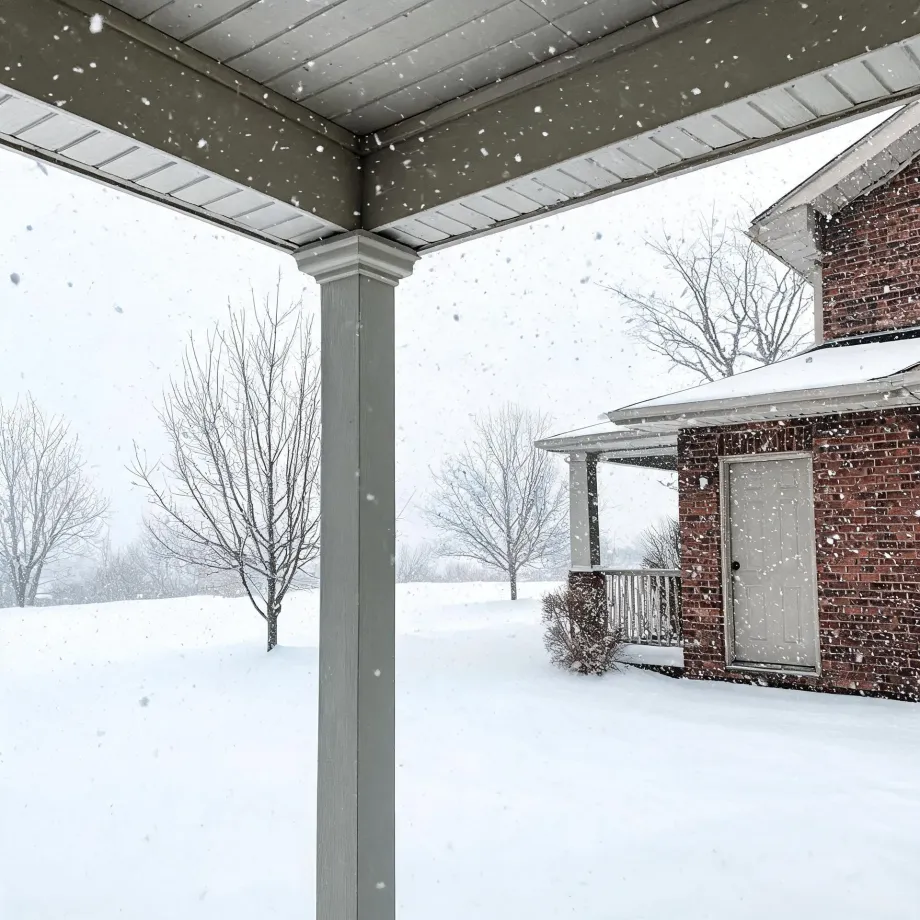
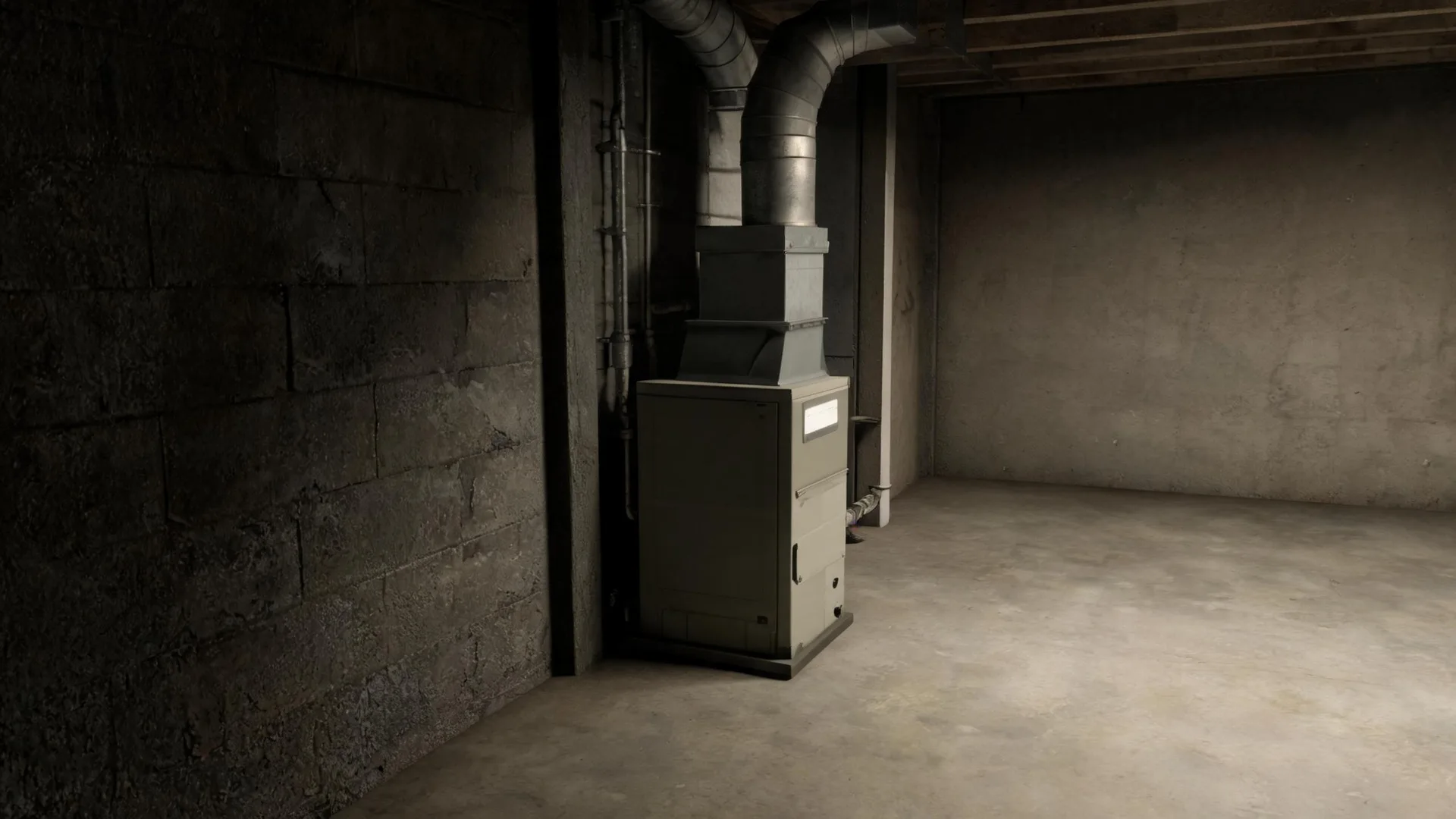
Sizing a furnace for a Middlesex County home is not a number a contractor pulls from a chart and calls done. Homes in Middlesex County, NJ run heat about seven months a year, from October through April. The burner and heat exchanger cycle hard through those months, and a system that is undersized or loosely commissioned accumulates stress on those components faster than the equipment was rated to handle. A contractor who skips a proper load calculation before the install leaves the homeowner with a furnace that is fighting the house rather than heating it, and the ignition system and heat exchanger are where that fight eventually shows up.
Existing ductwork is where a furnace installation in Middlesex County gets decided. Half the homes in Middlesex County, New Jersey were built in 1974 or earlier (2020-2024 ACS 5-year). A house built that long before today's high-efficiency equipment was designed around a different system entirely, and the ducts that fed it were sized for that system's output. A contractor sizing a new furnace has to assess whether those runs can carry the new unit's airflow without pressure loss or hot spots. The electrical service gets checked for the same reason. If either falls short, that work comes before the furnace goes in.
What Gets Installed With a New Furnace
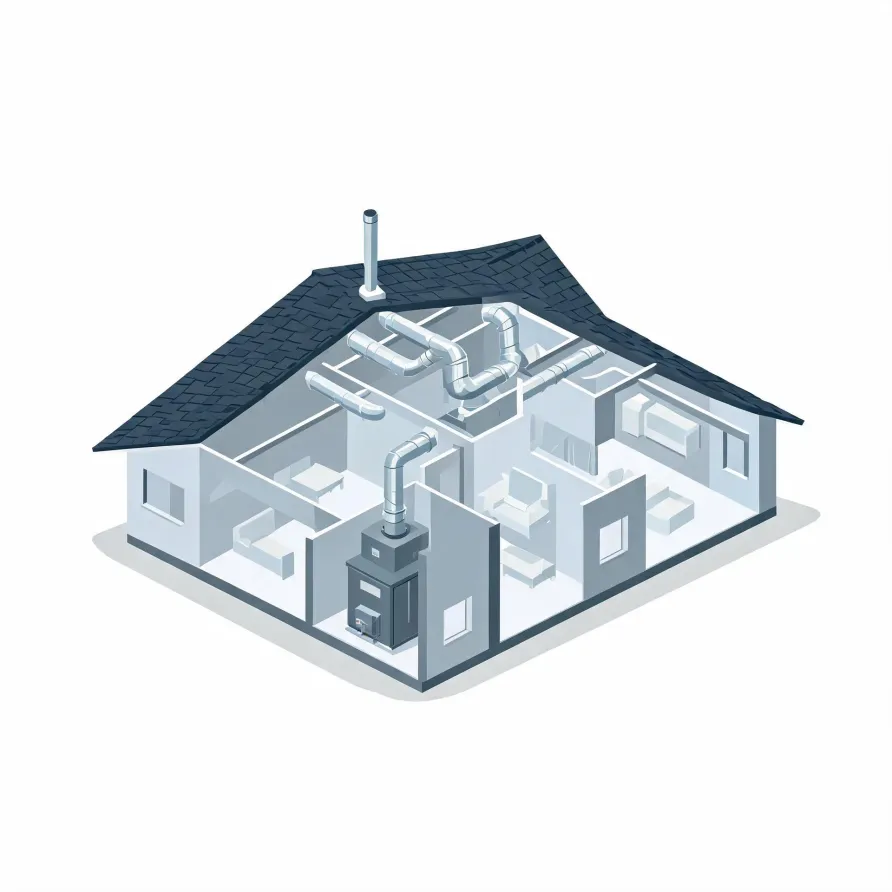
The furnace itself sits in the basement, utility room, or closet and is the heart of what you are buying. Inside it, a burner and a heat exchanger generate the warmth, and a blower motor pushes that air outward. The flue pipe rises from the unit and carries combustion gases out of the house.
The thermostat mounts on a main living-area wall and is the control point the household uses every day. Alongside the furnace, a contractor fits the gas line connection, the condensate drain if the unit is high-efficiency, and the fresh-air intake that feeds combustion.
The drawing shows a typical layout, and a licensed contractor determines exactly which components apply to your home.
Get matched in Middlesex CountyMiddlesex County, by the numbers
192 severe weather events were recorded in Middlesex County, New Jersey between 2015 and 2024.
NOAA National Centers for Environmental Information, Storm Events Database, bulk CSV export, events 2015-01-01 through 2024-12-31.Half the homes in Middlesex County, New Jersey were built in 1974 or earlier (2020-2024 ACS 5-year).
U.S. Census Bureau, 2020-2024 American Community Survey 5-Year EstimatesMiddlesex County, New Jersey holds 317,979 housing units (2020-2024 ACS 5-year).
U.S. Census Bureau, 2020-2024 American Community Survey 5-Year EstimatesOwners occupy 63.6% of the occupied homes in Middlesex County, New Jersey (2020-2024 ACS 5-year).
U.S. Census Bureau, 2020-2024 American Community Survey 5-Year EstimatesFurnace Installation Rules for Middlesex County, New Jersey6 sourced standards and codes
What HVAC Installation Looks Like in Middlesex County
Non-weatherized gas furnaces manufactured on or after November 19, 2015 must reach 80.0 percent AFUE.
Non-weatherized oil-fired furnaces manufactured on or after November 19, 2015 must reach 83.0 percent AFUE.
Mobile home gas furnaces manufactured on or after November 19, 2015 must reach 80.0 percent AFUE.
Non-weatherized gas furnaces manufactured on or after December 18, 2028 must reach 95.0 percent AFUE, up from the 80.0 percent minimum that applies to units manufactured before that date.
Licensing Rules for HVAC Work in Middlesex County, New Jersey
In New Jersey the HVACR licence is the State's alone: a municipality, local board of health or any other agency may not issue or renew a Master HVACR contractor's licence.
New Jersey requires a Master HVACR contractor licence: no person or business may engage in the business of HVACR contracting, or advertise as a Master HVACR contractor, without being authorised under the State HVACR Contracting License Law.
Severe Weather Events in Middlesex County, Year by Year
Extreme weather puts real load on heating equipment, and Middlesex County gets its share of conditions that push furnaces hard. How often that happens here shapes what a furnace needs to handle and what a contractor should account for at installation.
192 severe weather events, 2015–2024. Source: NOAA National Centers for Environmental Information, Storm Events Database.