Tell us about the job
Takes about a minute. No obligation.
Sizing a furnace for a Hudson County home starts with how long the burner actually runs. Homes in Hudson County, NJ run heat about seven months a year, from October through April. A heat exchanger and ignition system cycling through that kind of season accumulate wear that a contractor quoting off a generic table will not see coming. The installer has to build in capacity that holds up through months of repeated on-off cycling, not just through a cold week or two. An undersized unit runs longer burner cycles to chase the setpoint, and those cycles are where ignition components and heat exchangers fail.
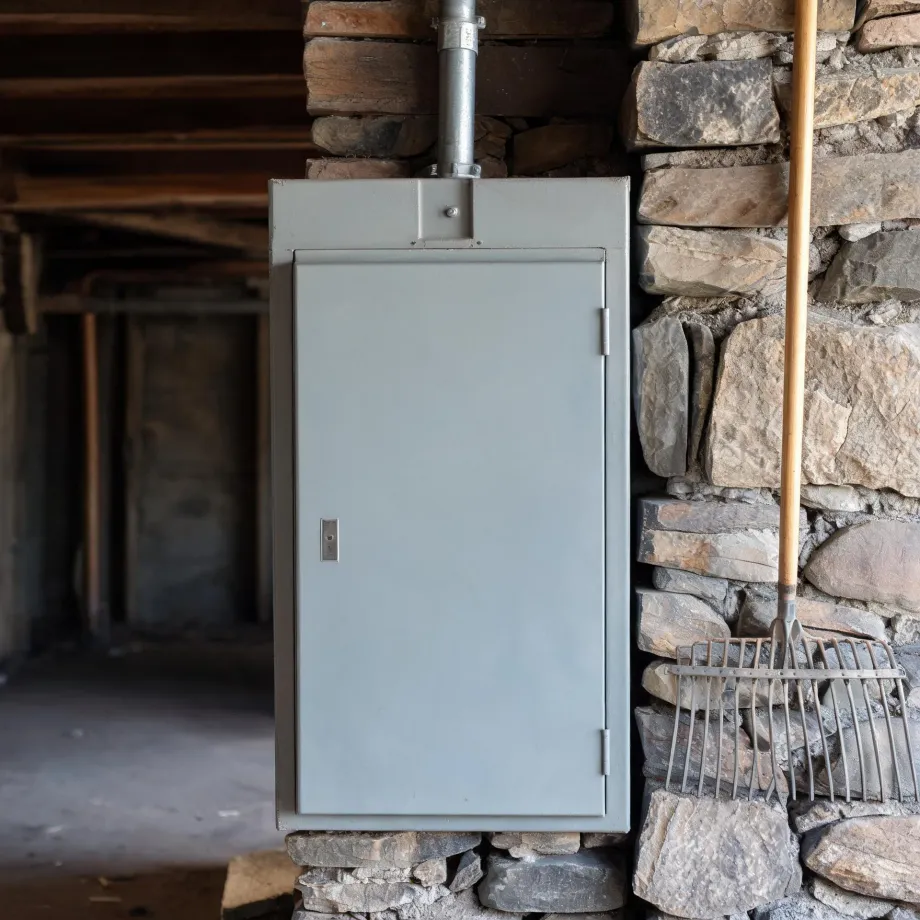
Ductwork in stock this old was sized around equipment that has since been replaced, sometimes more than once, and each replacement shifted the load the ducts were designed to carry. Half the homes in Hudson County, New Jersey were built in 1966 or earlier (2020-2024 ACS 5-year). A contractor installing a furnace here has to evaluate what the existing duct runs can actually handle before the new unit is chosen, because a box that does not match what the house will move will underperform regardless of its rating. The electrical side is a secondary check, but it is the ductwork that determines how the job is scoped and priced.
What Gets Installed With a New Furnace
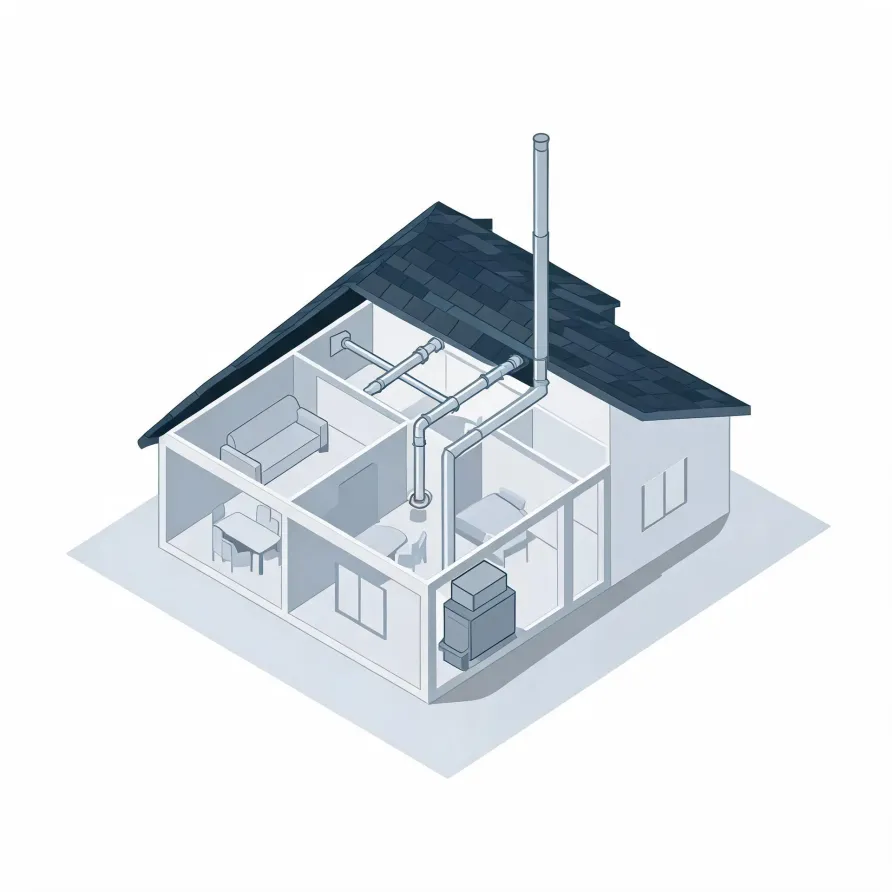
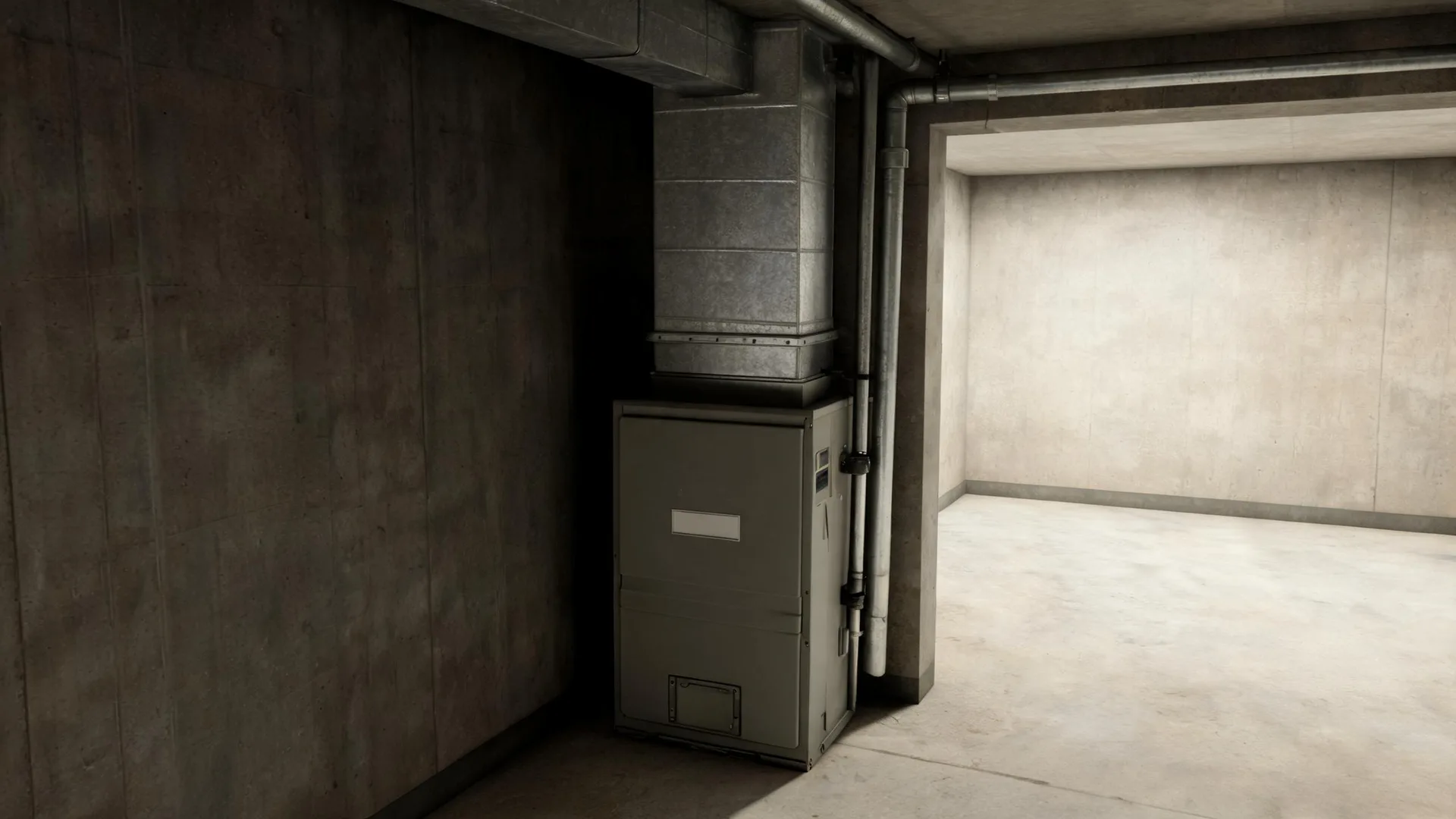
The furnace itself sits in a mechanical room, basement, or utility closet and is the unit that produces heat for the house. Attached to it is the flue or vent pipe, which runs through the wall or up through the roof and carries combustion gases out of the home.
The air handler and blower assembly move conditioned air into the duct system once the furnace has done its work. A thermostat mounts on an interior wall and serves as the control point, while a filter housing sits at the return-air opening to catch particulates before air reaches the furnace itself.
The drawing shows a general layout of these components, and a licensed contractor determines exactly what applies to your house.
Get matched in Hudson CountyHudson County, by the numbers
52 severe weather events were recorded in Hudson County, New Jersey between 2015 and 2024.
NOAA National Centers for Environmental Information, Storm Events Database, bulk CSV export, events 2015-01-01 through 2024-12-31.Half the homes in Hudson County, New Jersey were built in 1966 or earlier (2020-2024 ACS 5-year).
U.S. Census Bureau, 2020-2024 American Community Survey 5-Year EstimatesHudson County, New Jersey holds 320,959 housing units (2020-2024 ACS 5-year).
U.S. Census Bureau, 2020-2024 American Community Survey 5-Year EstimatesOwners occupy 30.7% of the occupied homes in Hudson County, New Jersey (2020-2024 ACS 5-year).
U.S. Census Bureau, 2020-2024 American Community Survey 5-Year EstimatesCodes & Standards Governing Furnace Installation in Hudson County, New Jersey6 sourced rules and standards
What the Installation Actually Looks Like
Non-weatherized gas furnaces manufactured on or after November 19, 2015 must reach 80.0 percent AFUE.
Non-weatherized oil-fired furnaces manufactured on or after November 19, 2015 must reach 83.0 percent AFUE.
Mobile home gas furnaces manufactured on or after November 19, 2015 must reach 80.0 percent AFUE.
Non-weatherized gas furnaces manufactured on or after December 18, 2028 must reach 95.0 percent AFUE, up from the 80.0 percent minimum that applies to units manufactured before that date.
Licensing and Legal Requirements in Hudson County, New Jersey
In New Jersey the HVACR licence is the State's alone: a municipality, local board of health or any other agency may not issue or renew a Master HVACR contractor's licence.
New Jersey requires a Master HVACR contractor licence: no person or business may engage in the business of HVACR contracting, or advertise as a Master HVACR contractor, without being authorised under the State HVACR Contracting License Law.
Severe Weather Events in Hudson County
Hudson County's weather puts real demands on heating equipment, and those demands shape what a furnace needs to handle over its life. How hard a system works, and how long it lasts, depends in part on what the local climate throws at it year after year.
52 severe weather events, 2015–2024. Source: NOAA National Centers for Environmental Information, Storm Events Database.